Recessed baseboard heaters blend into living spaces, delivering steady warmth with minimal visual impact. This guide highlights five trusted options from Cadet and other reliable brands, focusing on electrical baseboard models that fit standard wall profiles. Explore efficiency, installation, safety features, and thermostat options to help you choose the right recessed baseboard solution for small to mid-sized rooms. Below is a quick snapshot of top picks to consider.
| Product | Brand | Highlights |
|---|---|---|
| Cadet F Series 24″ Electric Baseboard Heater | Cadet | Compact 350/262 W, 240/208 V |
| Cadet F Series 72″ Electric Baseboard Heater | Cadet | High-output 1500 W, 120 V |
| Cadet F Series 36″ Electric Baseboard Heater | Cadet | 750 W, 120 V, 2560 BTU |
| Cadet F Series 48″ Electric Baseboard Heater | Cadet | 1000/750 W, 240/208 V |
| Comfort Zone CZ600 Electric Baseboard Space Heater | Comfort Zone | 1500 W convection, dual settings |
Cadet F Series 24″ Electric Baseboard Heater
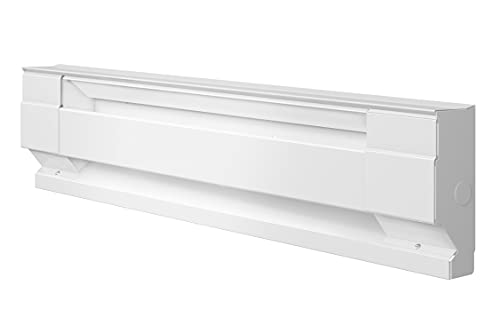
Model 2F350W is a compact, white steel baseboard heater designed for small rooms. It operates at 240/208 volts with 350/262 watts of heating output. The unit’s simple, all-metal construction supports straightforward wall-mount installation, and it includes essential safety features for residential spaces. Its recessed profile keeps sightlines clean while delivering consistent heat along baseboard runs.
Cadet F Series 72 in. Electric Baseboard Heater

This 72-inch Cadet model provides a robust 1500 watts of heating at 120 volts, ideal for larger wall runs in medium-sized rooms. Continuous heat delivery helps maintain a steady ambient temperature. Manufactured with Cadet’s durable construction, the unit emphasizes reliability for long-term use, making it a solid option for retrofit projects seeking recessed heating without sacrificing performance.
Cadet F Series 36″ Electric Baseboard Heater
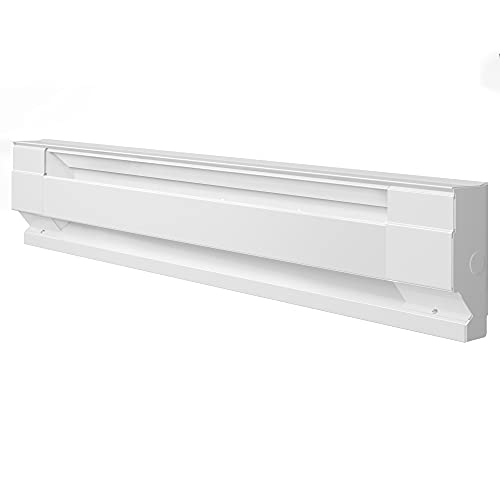
At 120 volts, this 750-watt model delivers 2560 BTU of heat in a compact 36-inch footprint. It requires a thermostat and features durable 25-gauge steel construction with a 20-gauge junction box with ground. All-metal construction and powder coating provide a long-lasting, maintenance-friendly option for recessed installations in living or working spaces.
Cadet F Series 48″ Electric Baseboard Heater
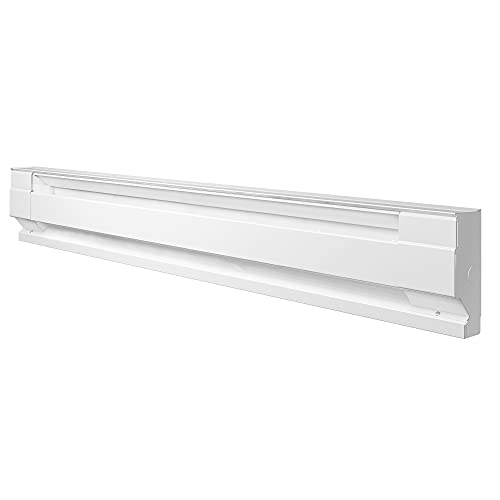
With 1000/750 watts at 240/208 volts, this Cadet model offers strong heating for small-to-medium rooms. Its universal wiring and pre-punched knockouts simplify installation on either floor or wall mounts, reducing retrofit costs. The unit also includes safety features like a high-temperature shutoff, helping to keep spaces protected during operation and ensuring dependable performance in a recessed layout.
Cadet F Series 72″ Electric Baseboard Heater

This 72-inch model (6F1500W) delivers up to 5120/3840 BTU at 240/208 volts, offering substantial space heating for larger rooms. It requires a thermostat and benefits from Cadet’s all-metal construction and powder-coated finish. Designing for recessed installation, it provides durable performance with a straightforward wiring approach—well-suited for renovations that aim to preserve wall lines without sacrificing heat output.
Cadet F Series 6F1500W Baseboard Heater (72 inches)
This high-output model provides 5120/3840 BTU at 240/208 V with 1500/1125 watts of heating power. It’s designed for thermostat-controlled operation, utilizing Cadet’s corrosion-resistant metal construction. Installation in recessed spaces is streamlined by standard mounting provisions and pre-punched access points, enabling efficient integration into existing baseboard runs while maintaining an uncluttered wall appearance.
Buying Guide: Key Considerations For Recessed Baseboard Heaters
- Heat output and voltage: Match BTU needs to room size with available circuit voltage (120V vs. 240V) and wattage. Higher BTU models suit larger spaces; lower wattage fits compact areas.
- Thermostat and controls: Some units require an external thermostat, while others include integrated control. Consider programmable thermostats for energy efficiency and consistent comfort.
- Installation type: Recessed baseboard units sit along the baseboard line. Confirm wall clearance, mounting requirements, and whether your space supports floor- or wall-mounted configurations.
- Construction and safety: Look for powder-coated steel with protective finishes, high-temperature shutoff, and stay-cool casings. Durable construction reduces maintenance and enhances safety in homes with children.
- Ease of wiring: Pre-punched knockouts and universal wiring simplify installation. Check local electrical codes and whether a licensed technician is recommended for your setup.
- Maintenance and replacement parts: Choose brands with accessible parts, spares, and straightforward replacement processes to minimize downtime.
- Energy efficiency and usage patterns: Consider models with multiple heat settings and thermostat compatibility to optimize energy consumption during shoulder seasons and winter peaks.
- Aesthetics and finishes: Recessed units come in white or neutral finishes to blend with most décors. Ensure the chosen model matches room style and trim heights for a seamless look.
- Noise and airflow: Baseboard heaters are generally quiet, but some fans or integrated blowers can introduce noise. Evaluate the need for silent operation in bedrooms or offices.
When selecting a recessed baseboard heater, prioritize compatibility with your existing electrical panel, wall space, and finish preferences. The right model balances heat output, installation practicality, and long-term reliability to stay comfortable through cold seasons.