Answering buyers seeking durable, high-heat sealants for fireplaces, stoves, and chimneys. This guide highlights five top refractory caulk and cement products designed to withstand extreme temperatures, with clear guidance on who each product is best for. Use this to choose fireproof sealants that prevent heat leakage, protect structural joints, and simplify DIY repairs.
The following table provides a quick snapshot of the selected products, including best use cases and notable strengths. This helps compare options at a glance before diving into detailed sections.
| Product | Best For | Key Strength |
|---|---|---|
| Kraken Bond High Temperature Black Fireplace Sealant 2732°F (2×10.1oz) | Heavy-duty fireplaces and stoves with large joints | Handles up to 2732°F; easy cleanup |
Kraken Bond High Temperature Black Fireplace Sealant 2732°F (2×10.1oz)
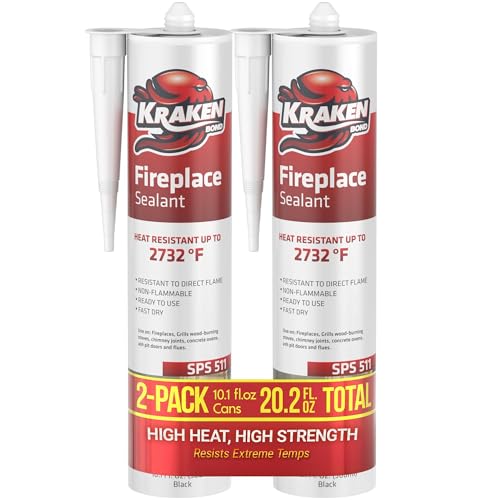
This Class-A fire rated sealant withstands temperatures up to 2732°F, making it suitable for fireplaces, stoves, chimneys, ovens, and HVAC joints. Best for larger heat-exposed gaps where a robust, durable seal is needed. It adheres to brick, stone, concrete, and metal. A limitation is that it requires careful surface prep for best results, and cleanup is easier when uncured and water-wipeable. Choose this if you need a high-heat seal for critical fireplace joints and want a pack that covers bigger projects.
Kraken Bond High Temperature Black Fireplace Sealant 2732°F (1×10.1oz)

This single-pack fire caulk shares Class-A fire rating and extreme-heat resistance up to 2732°F. It’s best for smaller projects or spot repairs in fireplaces and chimneys. The product cleans up with water when uncured and adheres to brick, stone, concrete, and metal. It’s a practical pick when you want a reliable, paintable sealant without committing to a multi-pack. Avoid applying over damp surfaces and ensure joints are clean for optimal cure.
Akfix Heat Fighter Black Fireplace Sealant 2700°F

Akfix offers a heat-resistant sealant designed for direct flame contact, rated up to 2700°F. It bonds well to brick, concrete, stone, and metal, making it versatile for fireplaces, stoves, ovens, and chimneys. It skin-dries in just 3–5 minutes, enabling fast, clean finishes. Best for quick repairs with a smooth finish, or for crafts where a fast-drying, paintable seal is desired. A potential limitation is the need to avoid heat exposure before full cure in some setups, so plan repairs accordingly.
KRAKEN BOND Fire Block Caulk White

This white acrylic sealant provides up to 250°F fire resistance and is paintable. Best for lighter-duty sealing around fireplaces, vents, or joints where a clean, white finish is preferred. It offers easy application and cleanup with water, and it adheres well to brick, stone, concrete, and metal. A limitation is its lower temperature rating compared to the other options, so reserve it for non-direct flame areas or less intense hot spots.
ComStar Furnace Cement, 1 Quart

ComStar Furnace Cement is a ready-to-use, non-messing high-heat paste rated for up to 3,000°F. It’s suitable for fireplaces, wood stoves, flue pipes, and firebricks. This product is best for professional-grade repairs where a rock-solid, long-lasting bond is essential. It’s pre-mixed for ease of use, reducing the chance of sagging during curing. Note that it’s a cement rather than a flexible caulk, so plan installations where slight movement is minimal.
Buying Guide: Practical Considerations For Fireplace Refractory Sealants
What to consider when selecting high-heat sealants for fireplaces and related structures:
- Temperature rating: Match the sealant’s rated maximum temperature to the expected heat exposure. Higher ratings (e.g., 2732°F) are better for direct-flame areas.
- Substrate compatibility: Check adhesion to brick, stone, concrete, metal, and mortar. Some products perform better on porous surfaces, while others excel on metal joints.
- Form factor: Choose caulk-like products for joints and cracks, or cement pastes for heavier repairs and securing firebricks or flue components.
- Cure time and ease of cleanup: Fast-drying formulas save time, while water-cleanup options simplify cleanup of uncured material.
- Paintability: If you want a seamless look, select paintable options, and factor in cure time before painting.
- Application environment: Indoor vs. outdoor exposure can affect performance; ensure the formula is suitable for your location and ventilation.
Additional Comparison Considerations
- Single vs. multi-pack: For large projects, multi-pack options may reduce waste and simplify stock management.
- Flexibility vs. rigidity: Some sealants cure to a slightly flexible seal, while others form a rigid matrix. Consider your fireplace’s movement and heat cycles when choosing.
- Ease of finishing: Skins that form quickly enable faster finishing with putty knives or caulk tools for smooth joints.
Frequently Asked Questions
- What is the maximum temperature a fireplace sealant should withstand?
Highest-rated products can handle up to around 2732°F, suitable for direct heat areas like fireplaces and wood stoves.
- Is a paintable fire sealant necessary for my fireplace?
Paintable options are beneficial for a uniform look, especially in visible areas. Ensure proper curing before painting.
- Can I use high-temp sealants on brick and mortar?
Yes, most products are designed to adhere to brick and mortar, but verify substrate compatibility on the product page.
- What’s the difference between caulk and cement in this category?
Caulk-style sealants are flexible and easier to apply; cement pastes provide stronger, more permanent bonds for heavy-duty joints.
- Do these products require professional installation?
Many home DIY projects are feasible with careful surface prep and following curing times; for structural repairs, consult a professional.
- Are there safety considerations when applying fire sealants?
Work in a well-ventilated area, wear gloves, and avoid contact with skin or eyes. Follow manufacturer safety data on the product packaging.