Finding a reliable salamander heater for a garage, workshop, or construction site can be challenging. This guide highlights five top-rated options designed to deliver dependable warmth in larger spaces. Each heater uses a different fuel source, offering flexibility for different fuels, safety features, and operating conditions.
| Product | Fuel Type | Approximate coverage | |
|---|---|---|---|
| Habitio 125,000 BTU Propane Heater | Propane | 75,000–125,000 BTU/h | Up to 3,125 sq ft |
| Mr. Heater 125,000 BTU Propane Heater | Propane | 125,000 BTU/h | Large workshops and garages |
| PioneerWorks 80,000 BTU Diesel/Kerosene Heater | Kerosene/Diesel | 80,000 BTU/h | Up to 2,000 sq ft |
| InoKraft MaXheat 68,000 BTU Propane Heater | Propane | 30,000–68,000 BTU | Up to 1,600 sq ft |
| Master MH-80T-KFA 80,000 BTU Diesel/Diesel | Diesel/Kerosene | 80,000 BTU | Up to ~1,875 sq ft |
These picks balance heating output, fuel type, safety features, and portability for real-world garage and jobsite use. Each unit is designed to deliver rapid warmth while maintaining sturdy construction for demanding environments.
Habitio 125,000 BTU Propane Heater
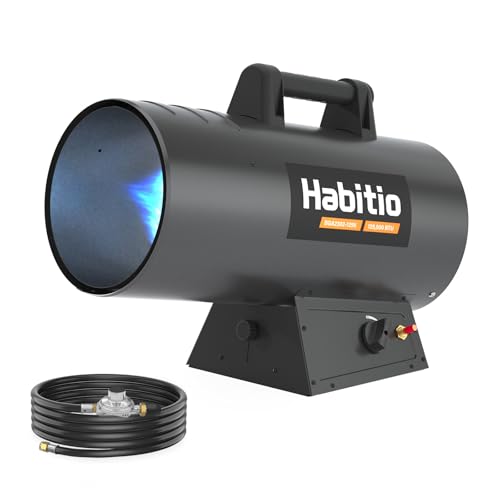
The Habitio unit delivers 75,000 to 125,000 BTU per hour and covers up to 3,125 square feet, making it suitable for large garages or job sites. It includes a 10-foot hose with regulator and uses pulse ignition for a safer start-up. Features overheat protection and auto-shutdown on power loss for dependable operation. CSA certified. Assembly and connection safety should follow the included guidance to prevent gas leaks. Note: Tighten gas fittings with a wrench after connection to minimize risks.
Key considerations include fuel availability, ventilation needs, and noise levels during extended operation. This model works well where continuous, robust heat is needed and where propane supply is steady. It’s best used in well-ventilated spaces to maintain air quality while achieving consistent warmth.
DR. INFRARED HEATER DR-PS11024 Salamander Electric Heater

This electric salamander concentrates clean heat with a 10,000-watt single-phase setup. It operates on 240-volt supply with a dedicated 55-amp circuit breaker. The heavy-duty steel frame and safety guards at intake and output ends emphasize durability and safe use in workshops. Electric units produce odor-free heat and are free of combustion byproducts, which can be advantageous for indoor spaces with ventilation constraints.
Consider this model if you prefer electric heat due to fuel flexibility, lower risk of gas leaks, and straightforward installation. It is ideal for dry-walled workshops and garages where electrical capacity is available and air quality is a priority.
PioneerWorks 80,000 BTU Diesel/Kerosene Heater
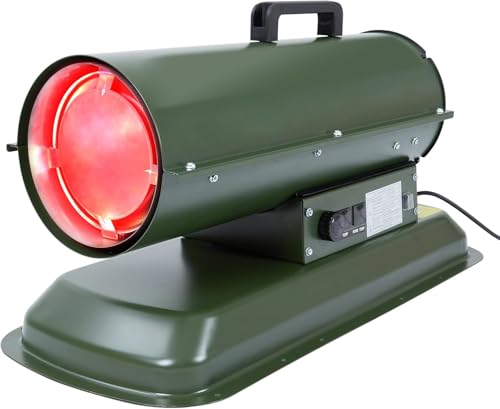
This torpedo heater offers up to 80,000 BTUs of heat and compatibility with multiple fuels, including kerosene, diesel, home heating oil, and jet fuel (not gasoline). It runs for up to 9.5 hours on a full tank with a tank capacity of 4.76 gallons. The unit provides strong heat output for large outdoor or poorly insulated spaces. It’s designed for rugged jobsite use, but fuel handling and ventilation are essential to prevent fumes and ensure safe operation.
Key considerations include fuel type availability, extended runtime needs, and the presence of good ventilation. When addresses are properly managed, this heater can efficiently warm large outdoor or semi-enclosed spaces, making it suitable for construction sites and garages that require dependable endurance.
InoKraft MaXheat MH68 68,000 BTU Propane Heater

The MaXheat MH68 provides a variable 30,000–68,000 BTU output, heating up to 1,600 square feet. It’s portable for garages and job sites, with a 10-foot hose and adjustable heat angle for flexible placement. Multi-protection safety features include overheat auto-shut-off and auto-cut-off to prevent gas leakage. CSA certification indicates compliance with safety standards. It operates with a focus on low noise, making it suitable for work environments where noise can impact concentration or compliance with on-site policies.
Consider this unit when you need adjustable heat distribution and thoughtful safety features in a compact, portable form. Proper ventilation remains essential to maintain air quality in enclosed spaces while using propane.
Mr. Heater 125,000 BTU Propane Heater F271390

This unit emphasizes quiet operation with Quiet Burner Technology, delivering about 50% quieter performance than standard propane heaters. It includes a 10-foot hose and regulator and a high-temperature limit switch for safer shutdown in overheating conditions. The design is suited for extended use in large garages or workshops where noise reduction is beneficial for comfort and safety during long shifts.
Key considerations include noise tolerance, fuel management, and secure venting. This model provides a balance of hefty heat output with reduced acoustic impact, which can improve workspace conditions in busy garages or construction environments.
Master MH-80T-KFA 80,000 BTU Diesel/Diesel Heater

The Master diesel heater delivers 75,000 BTUs and up to 1,875 square feet of warming potential. It features a thermostat-controlled operation, a cold-start system, and reinforced steel construction for durability. The unit emphasizes long-term reliability and energy efficiency in challenging environments such as shops, barns, or job sites. The robust rotor and vane design extends component life, reducing maintenance needs over time.
Consider this option when you require a heavy-duty heater with thermostat control and a durable build. Fuel management, ventilation, and regular maintenance are essential to maintain safe and efficient operation in larger spaces.
Global Industrial 102,300 BTU Electric Salamander Heater
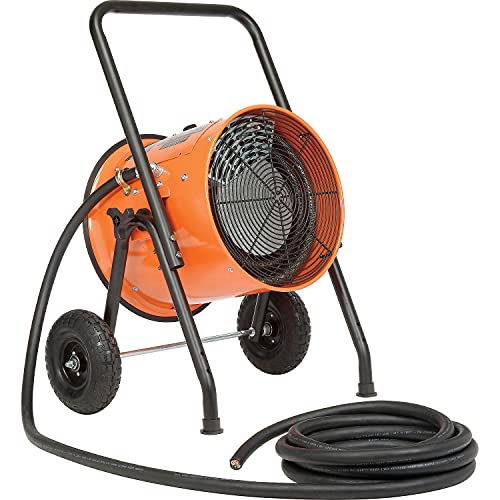
This 102,300 BTU electric model operates on 480V three-phase power and includes a 25-foot cable. It is designed for direct-wired installation and is mobile due to 10-inch wheels, facilitating transport around shop floors and construction sites. Electric heaters offer clean heat with no combustion byproducts and reliable, consistent warmth with proper electrical infrastructure.
Key considerations include electrical service availability, wiring safety, and the long-term cost of electricity versus fuel-based heat. It suits large indoor spaces where venting concerns or fuel storage are limiting factors and where electrical capacity is robust.
Tradesman CP170NU Portable Propane Heater

This torpedo salamander offers heat output from 125,000 to 170,000 BTU per hour with a thermostatic control for efficient energy use. It has a durable design suitable for indoor spaces like shops, garages, and barns. The unit emphasizes robust construction and reliable ignition, ensuring quick warmth in cold environments. Its portability is beneficial for projects in multiple rooms or sites.
When evaluating this option, weigh the need for adjustable BTU output against the available ventilation and the capacity to manage safe ignition and shutoff in enclosed spaces. Proper ventilation and safe clearance from combustibles remain essential for safe operation.
Buying Guide: Key Purchase Considerations
- Fuel type and availability: Propane, kerosene/diesel, and electric units each have pros and cons. Consider fuel storage, delivery, and local safety regulations.
- Space size and heat output: Match BTU ratings to space cubic feet and insulation. Overheating and energy waste can occur if the unit is too powerful for the area.
- Ventilation and air quality: Combustion heaters require proper ventilation to avoid buildup of fumes. Electric heaters may be preferred in tightly sealed spaces.
- Safety features: Look for overheat protection, auto-shutoff on power loss, flame safeguards, and CSA/UL certifications for reliability.
- Portability and installation: Some units are portable with wheels, while others require fixed installation or direct wiring. Ensure electrical circuits or fuel lines comply with local codes.
- Noise levels: Heaters vary in noise; consider worksite policies or user comfort when selecting a unit for extended operation.
- Maintenance and durability: Durable frames, rotor/vane components, and easy access for routine checks help extend service life in tough environments.
- Operating costs: Factor fuel price, electricity rate, and efficiency. Longer runtimes should align with available power sources or fuel supplies.