For reliable warmth during power outages or in areas without easy access to electricity, kerosene heaters offer a compact, efficient option. This guide highlights five compact models well-suited for indoor use in small spaces, garages, basements, and camping setups. Each entry includes real-world heating potential, safety features, and runtime considerations to help you compare options objectively.
| Product | Brand | BTU | ||
|---|---|---|---|---|
| Sengoku Indoor & Outdoor Kerosene Heater, 23,500 BTU | KeroHeat | 23,500 BTU | 1.9 gallons | Wide heating area up to 900 sq ft |
| Dyna-Glo Indoor Kerosene Convection Heater | Dyna-Glo | 23,800 BTU | — | Heats up to 1,000 sq ft; no electricity required |
| Windpost Indoor & Outdoor Kerosene Heater With 4 Wicks | Windpost | 11,000 BTU | — | Portable, suitable for indoor/outdoor use |
| Hengriacly Kerosene Heater 11,000 BTU | Hengriacly | 11,000 BTU | 6 L (1.58 gal) | Auto tip-over shut off; fast ignition |
| Kerosene Heater for Indoor Use, 9,000 BTU | vnekjse | 9,000 BTU | 4.5 L | 360° heating; safe 4.5 L design |
Choose a kerosene heater with a balance of BTU output, fuel capacity, and built-in safety. The models below offer a range of features suitable for small rooms, workshops, or emergency heating scenarios.
Sengoku Indoor & Outdoor Kerosene Heater, 23,500 BTU

The Sengoku HeatMate 110 model is designed for portable, compact heating with indoor and outdoor flexibility. It features a substantial 1.9-gallon tank that supports long runtimes, and a reliable safety shutdown along with a push-button start for quick setup without matches or electricity. Ideal for basements, garages, and camping setups where electricity may be unavailable.
Dyna-Glo Indoor Kerosene Convection Heater

The WK95C8 model provides a strong convection heating profile for up to 1,000 square feet without relying on electrical power. Its design emphasizes heat distribution and steady performance, making it suitable for larger small spaces, garages, or tents during colder seasons. The lack of dependency on electricity can be a decisive factor during outages.
Windpost Indoor & Outdoor Kerosene Heater With 4 Wicks

Windpost offers a portable 11,000 BTU kerosene heater capable of warming spaces up to 900 square feet. It is designed for indoor use and outdoor versatility, with a focus on quick heat without electricity. This model is well-suited for garages, workshops, or backup heating in cabins, especially where power may be unreliable.
Hengriacly Kerosene Heater 11,000 BTU
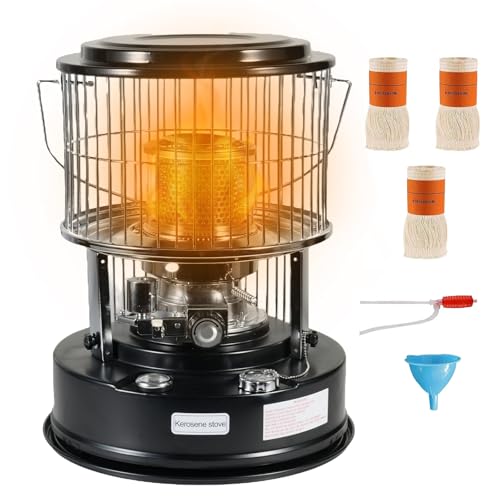
This model emphasizes safety with auto tip-over shut-off and a flame regulator, plus a large 6-liter tank intended to deliver continuous warmth for 20–24 hours. It supports indoor or outdoor use, making it a practical option for emergency heating, cabins, or any space where electricity is inconsistent or unavailable.
Kerosene Heater for Indoor Use, 9,000 BTU

This compact 9,000 BTU model provides 360° heating, with a 4.5-liter capacity designed for smaller rooms or tent setups. It emphasizes quiet operation and environmental considerations, delivering steady warmth without reliance on electricity, which makes it suitable for emergency kits and small living spaces alike.
Buying Guide: Key Considerations for Small-Space Indoor Kerosene Heaters
- BTU and heating area: Higher BTU generally translates to faster warmth and larger effective area. For small rooms, 9,000–12,000 BTU units are often sufficient, while larger spaces may benefit from 23,000–23,800 BTU units.
- Fuel capacity and runtime: Look for tank size and expected burn time. Larger tanks (4–6 liters) extend operation between refuels—critical in emergency use.
- Safety features: Auto shut-off or tip-over protection, flame adjustment, and protective grills reduce risk in occupied spaces and while sleeping nearby.
- Ignition: Push-button or auto-ignition can simplify startup, particularly during power outages. Avoid models that rely on matches in wet or windy environments.
- Portability: If you need to move heat between rooms or take it to a garage or cabin, weight and handle design matter.
- Ventilation: Kerosene heaters burn oxygen; ensure adequate ventilation, especially in smaller rooms. Follow manufacturer guidelines to maintain air quality and safety.
- Maintenance and wicks: Wicks influence heat efficiency and burn quality. Regular inspection helps prevent smoke or odor and maintains efficiency.
- Price vs. value: Compare runtimes, BTU output, and safety features to determine long-term value rather than upfront cost alone.
- Emergency readiness: Consider models with straightforward fuel refills, clear fuel gauges, and simple startup for emergencies when electricity is down.