During power outages or off-grid scenarios, having a reliable heater can be essential for safety and comfort. This article highlights five space heaters that perform well when electricity is unavailable or unreliable, including propane, radiant, and off-grid options. Each pick is evaluated for portability, safety features, heated area, and ease of use in emergency conditions.
| Product | Brand | Key Advantage for Outages | Heat Area |
|---|---|---|---|
| 9,000 BTU Portable Buddy Radiant Propane Heater | Mr. Heater | Indoor/outdoor use; reliable propane heat without electricity | Up to ~225 sq ft |
| VESTA Self-Powered Camping Indoor/Outdoor Heater & Stove | Insta-Fire | No power needed; off-grid warmth with stove capability | Up to ~200 sq ft |
| Gasland MHA18BN Propane Radiant Heater | GASLAND | Portability with safe propane operation; no electricity needed | Up to ~450 sq ft |
| Buyplus Outdoor Heaters for Patio, 1500W | Buyplus | Electric heater with fast heat and multiple modes for flexible use | Up to ~200 sq ft |
| Dreo Space Heater, 1500W Portable Electric Heaters | Dreo | Electric capability with safety features; useful when electrical power is available | Up to ~270 sq ft |
Below are detailed sections for each product, followed by a Buying Guide tailored for power outages and off-grid heating needs.
Mr. Heater 9,000 BTU Portable Buddy Propane Heater

The 9,000 BTU Portable Buddy radiator-style heater offers flexible radiant heat with selectable output of 4,000 or 9,000 BTU/hr. Designed for indoor and outdoor use, it provides warmth in spaces up to about 225 square feet. It runs on propane and does not require electrical power, making it a practical choice during power outages. Safety features typically include tip-over and oxygen-depletion shutoff, though users should operate in well-ventilated areas as directed by the manufacturer.
VESTA Self-Powered Camping Indoor/Outdoor Heater & Stove

The VESTA unit combines space heating with a stove in a single compact design, designed for off-grid use. It requires no electricity, relying on canned heat for operation and capable of heating spaces around 200 square feet. It is marketed as safe for indoor use, enabling warmth even when power is unavailable. Its dual-function design supports cooking an emergency meal while warming the area, which can be helpful in outages or remote locations.
Gasland MHA18BN Propane Radiant Heater

This propane radiant heater is portable and designed for use in ventilated spaces like garages or workshops. It operates without electricity, relying on a propane cylinder to provide warmth across spaces up to several hundred square feet. Safety features include tip-over and oxygen depletion shutoff mechanisms to promote safer operation in emergency environments. Its portability and lack of dependence on power make it a strong option during outages.
Buyplus Outdoor Heaters for Patio, 1500W

This electric patio heater offers 1500W heating with three operating modes and a self-resetting overload protector. It heats up quickly, covering roughly 200 square feet in outdoor or semi-outdoor settings such as porches or garages. A key advantage during outages is the ability to run on stored electrical supply via a generator or battery system, while the overheat protection adds a safety layer for prolonged use in emergencies.
Dreo Space Heater 1500W with Thermostat
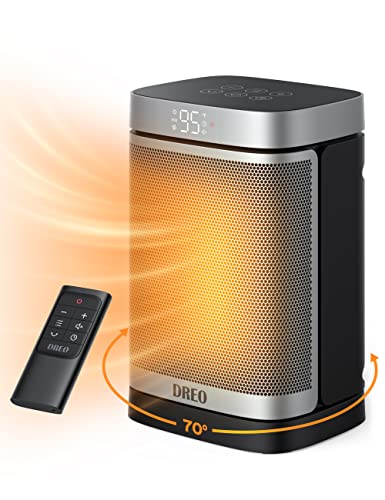
The Dreo 1500W space heater emphasizes fast warmth with its Hyperamics technology and a 12-hour timer. It offers multiple safety protections, including tip-over and overheat safeguards, V0 flame-retardant materials, and ETL certification. With a thermostat and 70° oscillation, it efficiently distributes heat in rooms up to about 270 square feet. This makes it a strong option when electricity is available but you want precise, controllable comfort during outages or cold spells tied to power reliability.
Buying Guide: Key Purchase Considerations For Power Outages And Off-Grid Use
- Power source flexibility: Prioritize heaters that work without electricity (propane, butane, or off-grid canisters) for outages, or those compatible with generators for continued operation.
- Heat coverage and room size: Assess the heater’s heater output (BTU for propane, watts for electric) relative to the space you need to warm. Larger spaces require higher BTU or multi-room strategies.
- Safety features: Look for oxygen depletion sensors, tip-over shutoffs, overheat protection, and flame-retardant construction. Ensure proper ventilation when using fuel-based units indoors.
- Portability and storage: Consider weight, handles, wheels, and fuel canister storage. For emergency kits, compact and easy-to-move units are advantageous.
- Maintenance and refueling: Propane and other fuel-based heaters require fuel planning and safe storage. Electric heaters depend on a reliable power source and may be paired with a generator or battery backup.
- Indoor air quality: Fuel-based heaters can affect indoor air. Use in well-ventilated spaces and follow manufacturer guidelines to minimize risks.
- Multi-function capabilities: Some units offer cooking or stove functions alongside heating, which can be beneficial during outages when other appliances are offline.
- Energy management: In electric options, consider ECO modes, timers, and programmable thermostats to optimize power use when power is restored or during limited outages.