Answering the buyer’s search for reliable, energy-efficient on-demand hot water, these top tankless options cover different home sizes and power needs. This guide helps you pick the right model for a single sink, a bathroom, or a whole-house setup. Each pick is explained with who it’s best for, plus practical limits to consider before purchasing.
| Product | Best For | Key Note |
|---|---|---|
| SIVUATEK 14kW Tankless Electric | Single bathroom or kitchen use, compact space | Requires 60-amp circuit |
| Rheem RTG Series 8.4 GPM | Whole-house with multiple showers | Outdoor installation, high GPM |
| Orbek 14kW Tankless Electric | 2–3 points of use, compact footprint | Needs 150-amp panel capacity |
| Westinghouse 14kW Electric 240V | Smart-home ready, two points of use | WiFi/voice control via app |
| NOVIEEX 18kW Electric | 2–3 points, space-rich utility areas | High electrical demand, requires 2 breakers |
Below are five selected products with concise specs and buyer-focused notes to help you compare quickly. Each entry links to its Amazon page for reference and image context.
SIVUATEK 14kW Electric Tankless Water Heater
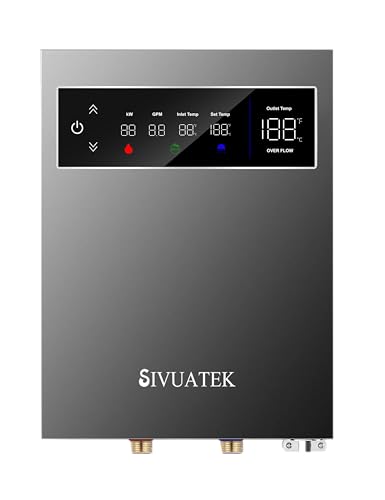
Best For: Small kitchens or bathrooms that need on-demand hot water without taking up much space. The unit delivers up to 99.8% thermal efficiency and is designed for 1–2 simultaneous usage points. Caution: requires a dedicated 60-amp circuit and standard 1/2″ NPT connections. Installation is faster since wiring does not require housing disassembly.
Rheem RTG Series 8.4 GPM Tankless Water Heater

Best For: Whole-house use with multiple showers, thanks to 8.4 GPM at a 35°F rise and 180,000 BTU/hour output. Outdoor installation avoids venting complexities and supports high-efficiency on-demand heating. Choose this if you want a durable, high-capacity outdoor unit for a larger home. Caution: outdoor placement requires weatherproofing and appropriate clearance.
Orbek 14kW Tankless Electric On-Demand

Best For: 2–3 use points with rapid hot water and energy efficiency. It provides up to 3.38 GPM and claims about 60% energy savings versus traditional tanks. Caution: verify household electrical capacity (150A recommended) before purchase to avoid overloading your panel.
Westinghouse 14kW Electric Tankless Heater

Best For: Smart-home enthusiasts who want WiFi/voice control and temperature memory. This unit delivers instant hot water with 98% efficiency and supports two simultaneous points of use. Caution: ensure a dedicated 60A double-pole breaker and 6 AWG wiring for safe operation.
NOVIEEX 18kW Electric Tankless Heater

Best For: Medium homes or apartments needing strong heat on multiple fixtures (up to 4.9 GPM). Requires two 40A double-pole breakers and two 8 AWG wires. This model is a good fit where space-saving wall-mount design is critical. Caution: it draws high electrical current; plan wiring accordingly.
Buying Guide: Tankless Hot Water Heater Essentials
- Household demand: Estimate peak usage (number of fixtures running simultaneously) to pick GPM and power.
- Electrical vs gas: Electric models are simpler for smaller homes; gas models deliver higher flow but require venting and gas supply considerations.
- Electrical service: Check panel capacity. Some units require 60A or 150A panels with multiple breakers and heavy gauge wiring.
- Installation location: Indoor under-sink versus outdoor mounting affects venting, exposure, and space planning.
- Space and size: Compact, wall-mounted units save space but verify clearances and water connections.
- Efficiency and cost: Look for high thermal efficiency (UEF) and real-world operating costs tied to your climate and usage.
- Maintenance: Consider protections against scale buildup and the ease of access for service if needed.
Frequently Asked Questions
- Do tankless water heaters require venting?
- What size tankless heater do I need for a two-bath home?
- Can I install a tankless heater myself?
- What maintenance is required?
- Is WiFi or app control worth it?
- How long do tankless heaters typically last?
Electric models typically don’t require venting, while gas models need venting and proper installation.
Generally, 8.4–10 GPM ranges cover typical two-bath homes with moderate climate; larger homes may need 14–18 kW electric units or gas units with higher GPM.
Some models are designed for DIY installation, but many configurations require a licensed electrician or plumber to ensure electrical or gas connections and code compliance.
Regular checks for mineral buildup, sediment flushing, and electrical or gas line inspections help sustain efficiency and longevity.
Smart controls offer convenient temperature management and remote monitoring, especially in smart-home setups or multi-zone homes.
With proper maintenance, electric and gas tankless heaters can provide many years of reliable hot water, though specific lifespans vary by model and installation conditions.