If you’re shopping for a propane-powered tankless water heater, you want reliable on-demand hot water, energy efficiency, and a model that fits your space. This guide covers five well-suited options and explains who each one is best for. Ideal buyers include small homes, cabins, RVs, and outdoor setups where electric hookups aren’t available. The following table highlights key details to compare at a glance.
| Product | Type | GPM | BTU | Best For |
|---|---|---|---|---|
| Ranein Propane Gas Tankless Water Heater, 3.6 GPM | Indoor | 3.6 | 80,000 | Small homes, 2-3 points demand |
| Ranein Propane Gas Tankless Water Heater, 8.5 GPM | Indoor | 8.5 | 190,000 | Whole-home, multi-point showers |
| Ranein Propane Gas Tankless Water Heater, 4.3 GPM | Indoor | 4.3 | 100,000 | Medium homes, multiple zones |
| ORBEK RV Tankless Water Heater, Propane | RV | 60,000 BTU burner | N/A | RV/van life, compact spaces |
| Kohree Propane Water Heater Tankless, 1.58 GPM | Portable/Camping | 1.58 | 41,000 | Outdoors, camping, cabins |
Ranein Propane Gas Tankless Water Heater, 3.6 GPM

This indoor model delivers on-demand hot water with 80,000 BTU and a 3.6 GPM flow. It serves 2-3 water points simultaneously, making it suitable for small homes or cabins where space is limited. Temperature control ranges from 95°F to 149°F, helping to prevent hot or cold swings and keep households safe for children and elders. With dual heating chambers, it emphasizes energy efficiency and stable water temperature, while reducing noise and improving heat retention.
Who it’s best for: small households needing reliable, multi-point hot water without a bulky system. Why chosen: compact indoor unit with adjustable temp and energy-saving design.
Limitations: may be less ideal for larger households or high simultaneous demand unless additional points are considered.
Ranein Propane Gas Tankless Water Heater, 8.5 GPM

This higher-capacity indoor model integrates a larger output with 8.5 GPM and a 190,000 BTU rating, designed to supply hot water to multiple points simultaneously. It emphasizes a safe combustion process with a blower that adjusts to wind and temperature changes, promoting full combustion and quieter operation. Its compact footprint is suitable for homes that need strong performance without sacrificing space.
Who it’s best for: larger households or homes with multiple baths needing steady hot water. Why chosen: strong flow and safety-focused features make it a robust all-around option.
Limitations: higher capacity requires careful installation and venting planning in some setups.
Ranein Propane Gas Tankless Water Heater, 4.3 GPM

This model combines 100,000 BTU with 4.3 GPM flow, supporting 3-4 water points at once. It features four preset modes for different scenarios (Kitchen, Bathtub, Shower, and a general 4-season mode) that auto-match temperature. The adjustable range is 95°F to 155°F with a high-temperature lock to prevent scalding.
Who it’s best for: homes that require moderate flow with flexible temperature presets. Why chosen: multi-mode presets simplify daily use and improve safety.
Limitations: more features mean more complex setup; ensure proper venting and clearances.
ORBEK RV Tankless Water Heater, Propane
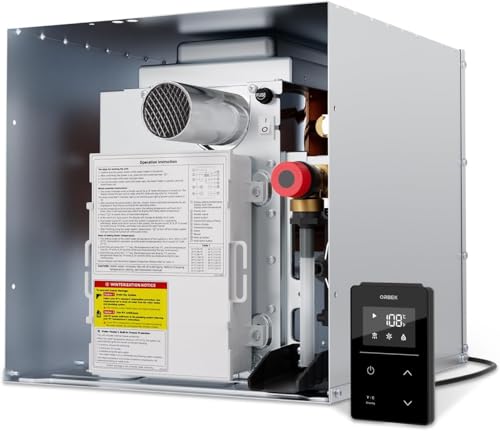
Specifically designed for RV use, this model uses a 60,000 BTU burner to deliver continuous hot water on demand while conserving propane. It is adaptable to standard RV openings and includes features like staged combustion to minimize temperature fluctuations and maintain safe, consistent output during travel. An optional RV door panel upgrade helps maintain appearance with existing setups.
Who it’s best for: RV owners and campers seeking reliable, on-demand hot water without large equipment. Why chosen: compact RV-focused unit with high-altitude adaptability and efficient propane use.
Limitations: designed for RV use; not ideal for full-time home installation without a supporting system.
Kohree Propane Water Heater Tankless, 1.58 GPM

Designed for portability, this 1.58 GPM unit delivers on-demand hot water with 3 PSI startup pressure and a temperature rise of up to 120°F. It includes CSA safety approval and six protection features, including anti-freeze and dry-combustion protections. Its windproof design makes it a practical option for outdoor use, camping, and cabins where space is at a premium.
Who it’s best for: outdoor enthusiasts, campers, and remote cabins needing lightweight, portable hot water. Why chosen: portability and strong safety features in a compact package.
Limitations: lower GPM means it’s less suitable for multiple simultaneous users.
Buying Guide
What to consider when choosing a propane tankless water heater
- Water flow needs: Match GPM and BTU to your household size and number of simultaneous hot-water points.
- Installation location: Indoor units require venting and space planning; RV/camping models prioritize portability and fit to openings.
- Temperature control: Look for adjustable temperature ranges and safety features like high-temp locks and anti-scald protections.
- Energy efficiency: Dual heating chambers and advanced combustion often improve efficiency; compare UEF or equivalent metrics where available.
- Durability and safety: Consider protection features (overheat, dry combustion, flame failure) and weather resistance for outdoor use.
Installation and compatibility tips
- Ensure proper gas supply and regulator compatibility with your local propane standards.
- Verify venting requirements for indoor units to avoid backdraft and CO risk.
- Check clearance and mounting provisions to fit your space, especially for RV or portable models.
Operational considerations
- Water pressure: Some units require a minimum start pressure; confirm your water system meets these thresholds.
- Altitude: High-altitude models benefit from specialized combustion adjustments to prevent flame-out.
- Maintenance: Regular checks of connections, venting, and safety devices ensure long-term reliability.
FAQ
- Do propane tankless water heaters require electrical power? Some units need electrical power for fans or controls, but many operate on propane with basic electrical connections for igniters or safety sensors.
- Can I install a propane tankless heater indoors? Indoor models require proper ventilation and clearances; RV and outdoor models are often better suited for non-residential spaces.
- What size propane heater do I need for a family of four? A higher flow model (around 4–8 GPM) with 100,000–190,000 BTU is typically suitable for multiple showers and daily hot water use.
- Is heat fluctuation common with tankless propane heaters? Modern units include precision temperature controls to minimize hot/cold spikes; ensure correct sizing and installation for best results.
- Are there safety concerns with propane tankless heaters? Yes—proper venting, regular maintenance, and correct regulator sizing are essential for safe operation.
- Can I use these heaters at high altitudes? Some models are designed for high-altitude operation, improving reliability in mountainous regions.