Answering buyers who want reliable control for electric baseboard heating, this guide compares five top options that fit 120V-240V systems. Each pick suits a different need—smart scheduling, voice control, simple dial operation, or universal compatibility. Use this overview to choose the right thermostat for your space, budget, and technical comfort level.
Summary of chosen products:
| Product | Brand | Best For |
|---|---|---|
| Mysa Smart Thermostat LITE for Electric Baseboard Heaters | Mysa Store | Smart scheduling, remote control, HomeKit/Alexa/Google |
| Honeywell Home Digital Non-Programmable Thermostat for Electric Heat | Home | Simple, reliable manual control |
| Cadet Store | DIY replacement, dual-pole safety | |
| Meross Matter Smart Thermostat for Electric Baseboard Heaters | meross Store | Matter ecosystem and multi-platform support |
| Cadet F Series Double Pole Built-In Thermostat | Cadet Store | Integrated fit with Cadet baseboard heaters |
Mysa Smart Thermostat LITE For Electric Baseboard Heaters

The Mysa LITE is a WiFi-connected, 120V-240V thermostat designed for electric baseboard heaters and convectors. It offers 7-day scheduling and remote control via the Mysa app. It also integrates with Apple HomeKit, Amazon Alexa, and Google Home, enabling voice commands and automations. Best for: tech-savvy renters or homeowners who want flexible, app-based control and voice-enabled integration. Limitation: requires WiFi and an app to access the full feature set.
Honeywell Home Digital Non-Programmable Thermostat
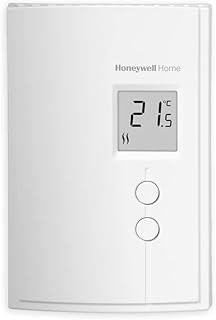
This Honeywell digital thermostat for electric heat is a non-programmable model that focuses on precise temperature control with a ±0.27°F accuracy. It uses a silent TRIAC switching mechanism to minimize noise and temperature fluctuations. Best for: buyers who want dependable manual control without learning an app or schedules. Limitation: lacks built-in scheduling or smart features.
Cadet Double Pole Line Voltage Thermostat

The Cadet Double Pole thermostat is a line-voltage control suitable for 120, 208, or 240-volt baseboard systems. It handles up to 5,280 watts at 240V and 2,640 watts at 120V with a 40–80°F adjustment range. Best for: DIY installers replacing older line-voltage units or upgrading safety with a double-pole design. Limitation: may require wiring work and compatibility checks with existing Cadet or heater models.
Meross Matter Smart Thermostat For Electric Baseboard Heaters

The Meross Matter thermostat supports 120-240V electric baseboard heating with Matter compatibility. It works with Alexa, Apple Home, Google Home, SmartThings, and more—allowing multi-platform voice control and automation. Best for: homes seeking broad ecosystem compatibility and future-proof smart home integration. Limitation: some users may experience setup nuances across platforms.
Cadet F Series Double Pole Built-In Thermostat

The Cadet F Series is designed as a built-in, double-pole thermostat for Cadet baseboard heaters. It features a large twist dial with a 45–80°F range and simple off positioning. Best for: installations that aim for a clean, integrated look with Cadet heating systems. Limitation: only compatible with Cadet F series heaters and may require specific mounting considerations.
Buying Guide
What should you consider when choosing a thermostat for electric baseboard heating?
- Voltage compatibility: Confirm your system is 120V, 208V, or 240V and pick a thermostat rated for the correct range.
- Control method: Do you prefer a manual dial, programmable schedules, or smart control via WiFi and voice assistants?
- Connectivity: If going with a smart thermostat, check compatibility with your preferred ecosystem (HomeKit, Alexa, Google Home, or SmartThings).
- Ease of installation: Some units are DIY-friendly with straightforward replacements, others may require wiring or professional help.
- Safety and reliability: Double-pole designs can provide better isolation, reducing the risk of stray currents and improving safety for high-wattage baseboard heaters.
- Energy savings: Look for models with scheduling, energy-use insights, or automatic temperature adjustments to minimize waste.
How to choose between smart and non-smart options?
Choose smart if you value remote access, automated schedules, and voice control. Non-smart models are more affordable, simpler, and free of app dependencies. For harder-to-control environments, a digital thermostat with precise temperature accuracy can reduce swings and improve comfort.
Do baseboard heaters require special wiring?
Most line-voltage baseboard heaters use 120V or 240V circuits. When replacing an old thermostat, verify wiring compatibility (line vs. load wires, and whether a double-pole switch is needed). If unsure, consult an electrician.
What about compatibility with other smart home devices?
Thermostats like Meross Matter and Mysa’s HomeKit/Alexa/Google integrations enable cross-platform automation. If you already use a smart home hub, verify whether a chosen model supports it to avoid compatibility gaps.
How important is the installation layout?
Some thermostats are designed for easy, end-mounted installation beside baseboard units; others are built into the heater enclosure. Consider space, aesthetics, and whether you want a seamless look with your baseboard heater model.
What is the expected maintenance?
Smart thermostats may require app updates and occasional firmware checks. Dial-based or non-programmable models have minimal maintenance beyond battery replacement in any supported accessories.
4-6 Buyer-intent Questions and Answers
- What is the best thermostat for baseboard heaters with smart features? Answer: Mysa Smart Thermostat LITE and Meross Matter Thermostat both offer WiFi and ecosystem compatibility, with scheduling and remote control.
- Which thermostat is easiest to install for a DIY user? Answer: Cadet Double Pole or Cadet F Series are designed for straightforward, end-mounted installation onCadet heaters and commonly favored by DIY installers.
- Which option provides the most precise temperature control? Answer: Honeywell Digital Non-Programmable Thermostat emphasizes high accuracy, suitable for users who need steady temperatures without scheduling.
- Are there options that support multiple voice assistants? Answer: Yes, Mysa and Meross offer integrations with major platforms like HomeKit, Alexa, and Google Assistant.
- What should I know about energy savings with baseboard thermostats? Answer: Look for programmable schedules and energy-saving features; smart thermostats typically enable cost reductions by reducing heat when away or at night.
- Can I replace my old thermostat myself? Answer: Many line-voltage and baseboard thermostats are designed for DIY replacement, but check wiring compatibility and local codes before proceeding.