Choosing the right tube heater for a garage involves balancing heat output, fuel type, installation practicality, and safety. This guide highlights five top options that cater to different needs—from natural gas overhead heaters to electric ceiling-mounted units—so you can warm up a workbench, car, or hobby space with confidence. Below you’ll find a quick comparison, followed by detailed product sections and a buying guide to help you decide which option best fits your space and usage patterns.
| Product | Brand | Type | Heat Output |
|---|---|---|---|
| Heatstar By Enerco F125444 Radiant Overhead Garage Heater H25Ng Natural Gas | Heatstar By Enerco | Natural Gas Overhead | Heat up to 500-600 sq. ft. |
| SunStar Heating Products Garage Tube Heater – Natural Gas 45,000 BTU | SunStar | Natural Gas Tube Heater | 45,000 BTU |
| SunStar Heating Products Garage Tube Heater – LP, 45,000 BTU | SunStar | Propane/Lp Tube Heater | 45,000 BTU |
| TEMPWARE Electric Garage Heater, 7500-Watt | TEMPWARE | Electric Ceiling Mount | Up to 7,500 W |
| Shinic 2 Packs Electric Garage Heaters with Remote Control | Shinic | Electric Ceiling Mounted | 1500W/750W |
When selecting a garage tube heater, consider the space size, ventilation, fuel availability, and desired installation footprint. Gas models deliver strong, long-range heat for larger spaces, while electric heaters offer easier installation and precise control in smaller to mid-size garages. Always follow local codes and manufacturer instructions for safe operation and venting requirements.
Heatstar Overhead Gas Garage Heater
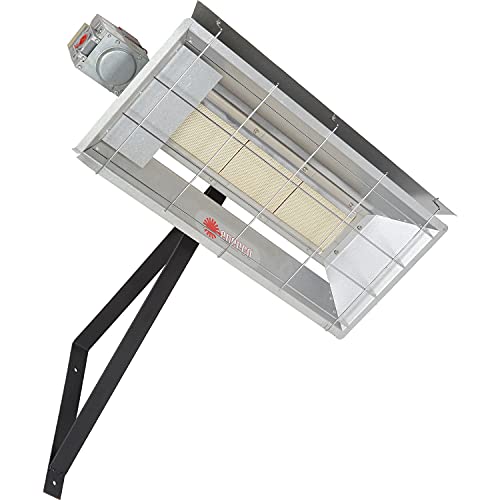
The Heatstar By Enerco F125444 is an overhead natural gas heater designed to warm large garages efficiently. It heats spaces of roughly 500–600 square feet, making it suitable for two-car spaces or larger workshops. The unit carries CSA certification, indicating adherence to safety and performance standards for gas-fired equipment. A notable feature is the thermostatic control that requires no external power, helping to maintain steady heat without relying on electrical systems for control. Materials and construction emphasize durable, long-term operation in a garage environment. This model is ideal where natural gas is readily available and a ceiling-mounted solution is preferred to keep floor space clear.
SunStar Gas Tube Heater, 45,000 BTU

SunStar’s 45,000 BTU natural gas tube heater provides robust heat for larger garages and workshops. The compact tube layout is designed for straightforward installation, and the unit emphasizes efficiency with high operational performance. Installation typically requires venting and appropriate clearances, aligning with standard gas heating practices. This option suits spaces that demand significant sustained warmth without the footprint of large external equipment. It’s a strong choice for users who prioritize consistent, high-output heat with a proven gas-fired tube design.
SunStar LP Gas Garage Tube Heater

This natural gas and LP configuration from SunStar offers flexibility for garages using propane or natural gas. The 45,000 BTU output is designed to cover large work areas, with tube-style design that distributes heat evenly along the length of a garage. The model supports efficient operation while maintaining reliable performance in spaces where temperature consistency is critical for workbench tasks and vehicle maintenance. Venting requirements and gas line considerations should be reviewed prior to installation to ensure safe, compliant operation.
TEMPWARE Electric Garage Heater
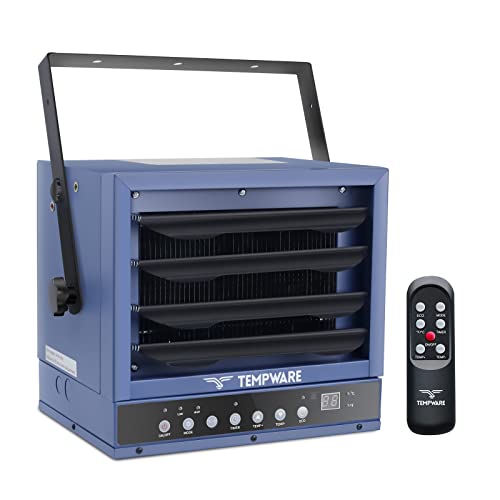
The TEMPWARE electric model combines ceiling-mounted installation with substantial heat output of up to 7,500 watts. A built-in thermostat and overheat protection enhance safety, while ECO mode and a timer help manage energy use. The unit features adjustable louvers and mounting angle, enabling precise air distribution to occupied zones. With a heat range suitable for larger garages or multi-workstation setups, this heater is a practical option for spaces where electrical access is straightforward and gas lines are not available.
Shinic Garage Heater With Remote
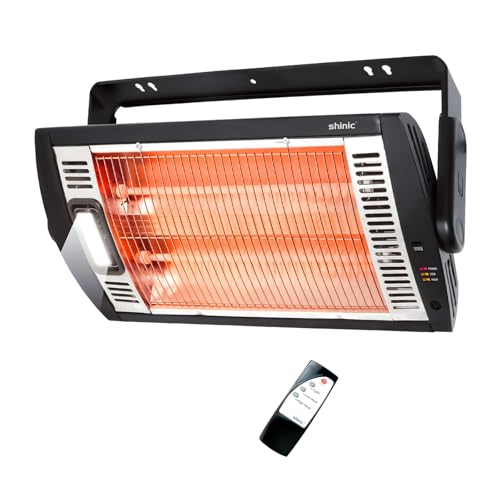
The Shinic ceiling-mounted heater includes a remote control and five operation modes, plus a 90-degree tilting capability for directing heat precisely where it’s needed. Its 1500W rating is suitable for smaller to mid-size garages and shops, offering rapid warm-up for user comfort during cold-weather projects. The unit emphasizes safety with overheat protection and ETL listing for indoor and outdoor use, making it versatile for different garage layouts and climates. This option is well-suited for hobbyists and DIY projects requiring quick warmth without heavy installation effort.
Danluke Outdoor/Indoor Wall Heater

This 1500W wall-mounted infrared heater is designed for both indoor and outdoor use, making it a versatile option for garages that double as workshop spaces or covered patios. The unit provides rapid, direct heating with infrared technology and is IP34-rated for weather resistance. Its compact profile makes it a practical choice for garages where wall space is at a premium or where ceiling installations are less feasible. It’s effective for quick warmth and spot heating, especially in open or semi-enclosed spaces.
Buying Guide: Key Purchase Considerations
Selecting the right garage heater involves weighing several factors to match your space and usage patterns. Here are the primary considerations and how they affect choice:
- Heat source and efficiency: Gas heaters (natural gas or propane) usually deliver higher heat output for larger garages, but require venting, gas lines, and compliance with installation codes. Electric units offer easier installation and precise control, ideal for smaller spaces or rooms without gas access.
- Room size and heat load: For spaces under 500–600 square feet, overhead gas models or mid-range electric heaters can be sufficient. For larger garages, higher BTU outputs or multiple units may be necessary to maintain comfort.
- Ventilation and safety: Gas heaters must be vented properly and installed with attention to clearance, combustible materials, and exhaust. Electric heaters pose fewer venting concerns but require adequate electrical service and circuit protection.
- Installation space and aesthetics: Ceiling-mounted units save floor space and provide even heat distribution, while wall-mounts and portable solutions offer flexibility. Consider whether future reconfiguration is likely when choosing mounting options.
- Controls and features: Thermostats, ECO modes, timers, and remote controls enhance energy management and user experience. Look for overheat protection and ETL or CSA certifications for safety.
- Maintenance and longevity: Regular inspection of gas lines, venting, and electrical connections helps ensure safe operation and efficiency. Check warranty terms and readily available replacement parts when evaluating options.
- Budget and operating costs: Gas-fired units may incur ongoing fuel costs and venting requirements, while electric units incur electricity costs. Factor in local energy prices and long-term maintenance when comparing total cost of ownership.
In summary, the best choice depends on space, existing utilities, and how you plan to use the garage. For larger spaces with reliable gas access, overhead or tube gas heaters from reputable brands provide robust, steady warmth. For simpler installations or spaces without gas, electric ceiling-mounted options with adjustable controls can deliver reliable comfort with straightforward setup. Always verify local codes and install requirements before purchasing.