If you need a reliable twin wall flue system, these products are designed to safely vent pellet stoves, wood stoves, and other appliances through walls or ceilings. This guide highlights five solid choices, explains who they’re best for, and flags any limitations to consider before buying. The focus is on corrosion resistance, ease of installation, and compatibility with common stove types.
Buyer summary table (quick reference)
| Product | Best For | Key Benefit | Limitations |
|---|---|---|---|
| DuraVent PelletVent Horizontal Double-Wall Pipe Kit | Pellet stoves and multi-fuel heaters needing a horizontal through-wall install | Complete kit with fittings for a clean through-wall setup | 3-inch system specific; needs proper wall thimble and clearance |
| DuraPlus Through the Wall Kit (6″) | Through-the-wall vertical installs for larger chimney runs | Secure twist-lock design; supports long vertical runs | Assumes 6″ pipe; not a full kit for all configurations |
| AllFuel HST 6″ x 48″ Class-A Double Wall | All Fuel Class-A systems with high-temperature venting | 304 stainless steel inner/outer walls; high corrosion resistance | Not compatible with other brands’ class-A pipe |
The following sections detail each recommended product, including who benefits most, why selected, and a practical caution for installation or use. Use this as a proactive, comparison-friendly resource to guide decisions.
DuraVent PelletVent Horizontal Double-Wall Kit

This complete horizontal vent kit is designed for 3-inch pellet stove and multi-fuel heater exhaust applications. It includes five 12-inch pipes, a 90-degree elbow tee, a cleanout tee with cap, an appliance adapter, a wall thimble, a horizontal termination cap, and installation instructions. Best for: homeowners with pellet stoves needing a straightforward horizontal through-wall vent. Reason for selection: the kit simplifies installation by providing all necessary components in one package. Limitation: designed specifically for 3-inch systems, so ensure your appliance matches this size.
DuraPlus Through the Wall Kit

Best for: installations requiring a robust through-the-wall vertical chimney with a 6″ diameter. This kit features a secure twist-lock design and supports up to longer chimney runs when paired with the corresponding pipe. Why selected: it provides a reliable through-the-wall solution with a strong locking mechanism. Limitation: the kit description notes it supports up to 40 feet of chimney pipe (pipe not included); verify your vertical height needs.
AllFuel HST 6″ x 48″ Class-A Double Wall Pipe

Best for: AllFuel HST Class-A installations that demand high corrosion resistance and a 304 stainless steel inner/outer wall. Selected for its durable construction and insulation permitting a 2″ clearance to combustibles. Reason for selection: the all-fuel, all-stainless design supports safe, long-term operation in challenging venting conditions. Limitation: Not compatible with other brands’ class-A pipe; ensure you purchase the matching AllFuel components.
AllFuel HST Through The Wall Kit (18″ Length)
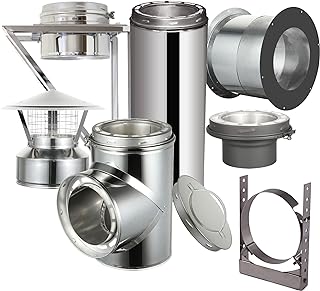
Best for: users needing an 18″ through-the-wall solution with adjustable wall brackets. It is designed to pass through thicker walls while maintaining safe clearances. Why selected: adjustable wall brackets add flexibility for diverse wall structures and gutter overhangs. Limitation: components are specific to AllFuel HST Class-A pipe and lengths sold separately; verify wall thickness and required pipe length before buying.
AllFuel HST Through The Wall Kit With Flat Top Cap (24″ Length)
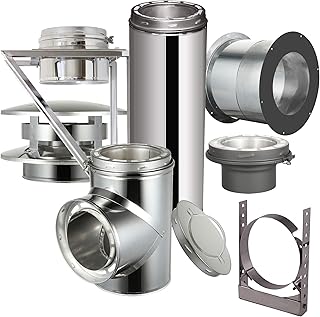
Best for: through-wall venting with a flat top cap, suitable for exterior-facing installations where a flat-cap finish is preferred. Why selected: the kit provides a consistent through-wall solution using AllFuel’s Class-A double-wall pipe. Limitation: length is fixed at 24″ for this kit; confirm if extra length is needed for your wall thickness and external chase requirements.
Buying Guide
Key considerations when choosing a twin wall flue system include the stove type, pipe diameter, wall thickness, and installation location. For pellet stoves, a smaller diameter like 3 inches may be sufficient, while all-fuel or wood-burning appliances often require 6-inch or larger Class-A systems. Durability is essential; stainless steel inner walls resist corrosion and maintain heat integrity. Compatibility matters: some brands only work with their own pipe, so confirm cross-brand compatibility before mixing components. Through-the-wall configurations demand accurate wall thickness measurements and appropriate wall thimbles or brackets to maintain clearances. Consider whether you need a complete kit with fittings or individual components to fit an existing setup. Finally, plan for end caps or termination methods that suit exterior exposure and weather conditions.
Frequently Asked Questions
- What is a twin wall flue system? A twin wall flue system uses an inner pipe surrounded by an outer wall with insulation to improve safety, heat retention, and corrosion resistance during venting.
- Do I need a wall thimble? Yes, a wall thimble provides a safe, code-compliant through-wall passage and helps prevent heat damage to wall materials.
- Can I mix brands for a through-the-wall kit? Compatibility varies. Some AllFuel HST components only work with AllFuel HST pipe, so mixing brands may be incompatible.
- How do I choose between 3-inch and 6-inch systems? Choose based on appliance exhaust requirements and recommended vent diameter. Pellet stoves often use 3-inch, while larger or all-fuel systems commonly require 6-inch through-wall configurations.
- Is stainless steel necessary for the inner wall? Stainless steel offers corrosion resistance and durability, which helps long-term performance and safety in gas, pellet, and wood venting.
- What about external clearance? Insulation and double-wall design help maintain safe clearances to combustibles, but always verify local code requirements and install clearances.