Choosing a vented garage heater involves balancing heating capacity, venting flexibility, and safety features. This guide highlights top vented options designed to heat garages, workshops, and utility spaces effectively. Each product below includes venting compatibility, delivery BTU ranges, and key installation notes to help you compare quickly and decide which model matches your space and needs.
A quick overview of the curated options:
| Product | Brand | Venting Type | Approx. BTU | Notes |
|---|---|---|---|---|
| Mr. Heater F260550 Big Maxx MHU50NG | Mr. Heater | Power vent optional (vertical/horizontal) | 50,000 BTU | Heats up to 1,250 sq. ft. |
| Mr. Heater F260560 Big Maxx MHU80NG | Mr. Heater | Vertical or horizontal venting | 80,000 BTU | Large coverage, includes brackets |
| Modine Direct Vent Hot Dawg HD45AS01-21 | Modine | Direct vent | 45,000 BTU | Compact, residential/commercial use |
| Mr. Heater Vent Free Radiant MHVFRD20NGT | Mr. Heater | Vent-free (indoor reliance) | 30,000 BTU | Infrared warmth, supplemental heat |
| Dyna-Glo IR30PMDG-1 30,000 BTU | Dyna-Glo | Vent-free | 6,000–30,000 BTU | Infrared heating, room-focused |
Mr. Heater F260550 Big Maxx MHU50NG Natural Gas Unit Heater
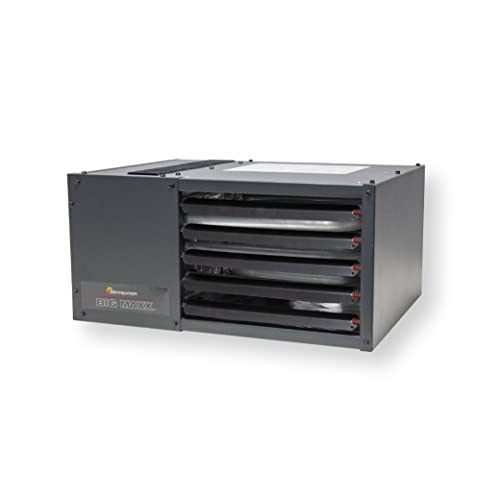
This natural gas unit heater delivers 50,000 BTU per hour and can heat spaces up to roughly 1,250 square feet. It features powered exhaust that supports both vertical and horizontal venting, expanding installation flexibility. The model is designed for easy access to thermostat, A/C terminals, and the gas connection from outside, simplifying service and adjustments after installation. A solid choice for medium-sized garages needing reliable, zone-ready warmth with flexible venting options.
Mr. Heater F260560 Big Maxx MHU80NG Natural Gas Unit Heater
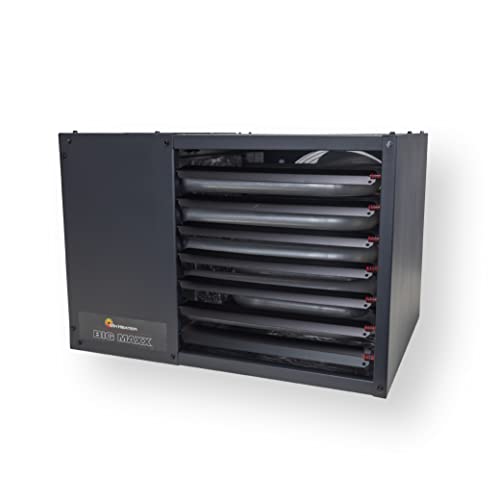
This larger variant offers 80,000 BTU and is designed for up to about 2,000 square feet of space. It emphasizes robust performance with vertical or horizontal venting and includes mounting options suitable for different garage layouts. Its dimensions and airflow target larger layouts, making it a practical option for workshops or double-car garages where even heat distribution is important for comfort and productivity.
Modine Direct Vent Hot Dawg HD45AS01-21

The Hot Dawg HD45AS01-21 is a direct-vent unit heater from Modine, delivering 45,000 BTU with a compact profile suitable for smaller garages or utility rooms. Direct venting minimizes outdoor venting complexity by drawing air from inside and exhausting outdoors, which can improve efficiency and placement flexibility in tight spaces. It’s designed to meet residential and light commercial needs while maintaining a quiet operation profile.
Direct Vent Garage Heater Hot Dawg

Modine’s Direct Vent Hot Dawg model provides 60,000 BTU in a vented configuration, emphasizing reliable performance for garages needing steady warmth with efficient venting. The direct vent approach helps with tighter spaces and reduces outdoor venting complexity, while maintaining compatibility with natural gas supplies. This option can be suitable for mid-sized garages seeking a balance of output and installation flexibility.
Heat Storm HS-6000-GC Heater

The Heat Storm HS-6000-GC provides 3,000 to 6,000 watts of electric heating with a potential 10,000–20,000 BTU output range. It’s designed for garage or workshop spaces with ceiling or wall mounting options. The unit can be connected to a WiFi network for remote control, enabling convenient operation from a smartphone. It offers quiet operation with modern conveniences, though it relies on electricity rather than natural gas for heat generation.
Mr. Heater Vent Free Radiant MHVFRD20NGT

This vent-free radiant heater delivers up to 30,000 BTU and uses infrared technology to warm objects and people directly. It provides efficient supplemental heat for offices, homes, garages, patios, cabins, and other spaces. It includes safety features such as an automatic low-oxygen shut-off system to reduce gas delivery when oxygen levels drop. Ideal for spaces where direct warmth is preferred without extensive venting infrastructure.
Dyna-Glo IR30PMDG-1 30,000 BTU Infrared Wall Heater

The Dyna-Glo IR30PMDG-1 is a vent-free infrared wall heater offering 6,000–30,000 BTU output. It’s designed to radiate heat to objects and people, beginning warmth quickly in a garage setting. Suitable for intermittent use or supplemental heating, it provides space-efficient installation and can be a flexible addition to a heating plan for smaller garages or workspaces where electrical or gas venting constraints exist.
Buying Guide: Key Purchase Considerations
- Ventilation type and space layout: Choose direct-vent or vented models when you have exterior venting options and a clear path for exhaust. Vent-free units work where venting is impractical but require CO safety considerations and adequate indoor air supply.
- BTU capacity and space size: Match heater BTU to your garage’s square footage and insulation level. Oversizing can waste energy, while undersizing may fail to reach comfortable temperatures in colder months.
- Fuel type and operational costs: Gas-fired units typically offer lower running costs in households with natural gas. Electric infrared options provide clean operation and easier installation but may incur higher electricity usage.
- Installation flexibility: Look for models with adjustable venting directions, external thermostat access, and easy mounting options to fit your garage’s shape and entry points.
- Safety features: Automatic shut-off, oxygen depletion sensors, and durable casings reduce risk in enclosed spaces. For vent-free units, ensure proper room size and clearance per manufacturer guidelines.
- Maintenance needs: Consider ease of access for routine servicing, filter cleanliness (where applicable), and availability of replacement parts from the brand.
- Smart or remote control options: Some electric units offer WiFi connectivity or remote control, enabling convenient adjustments from a phone or smart home setup.
All listed models are designed to provide reliable warmth in garages and workshops, with various venting options and BTU ranges to accommodate different space sizes and installation constraints. When choosing, consider your existing venting capability, space layout, and whether you prefer gas or electric heating for long-term operating costs and maintenance.