Answering your search for reliable water heater cathode rods, this guide highlights five top options that help prevent tank corrosion, reduce sediment buildup, and eliminate sulfur smells. Best for homeowners seeking odor-free hot water, best for tight spaces, and best for general tank protection. The listed products are selected for compatibility with common 40-89 gallon tanks and varied water conditions.
Summary of chosen products:
- Corro-Protec Powered Anode Rod – Odor removal, corrosion protection, 20-year warranty
- Ozek Anode Rod – 44″ flexible aluminum zinc, tight-spaces friendly
- 44″ Flexible Magnesium Anode Rod – Broad compatibility, includes install kit
- Powered Anode Rod for Water Heater (HertzEagle) – Titanium powered, sulfur odor elimination
- Eau 44 Inch Flexible Magnesium Rod – Easy replacement, install kit included
Corro-Protec Powered Anode Rod

Best for: Homeowners seeking odor-free hot water and permanent corrosion protection. This powered anode rod claims to address sulfur odors and reduce sediment buildup while defending against hard-water challenges. It’s designed to replace standard hex-head rods in 40-89 gallon tanks and supports softened water environments.
Why chosen: It combines odor control with long-term tank protection, backed by a 20-year warranty and a stated capability to handle various water hardness levels. The product targets both odor issues and corrosion prevention in a single solution.
Caution: Product data emphasize sulfur odor removal; ensure compatibility with your specific tank model and installation space before purchase.
Ozek Anode Rod For Hot Water Heater
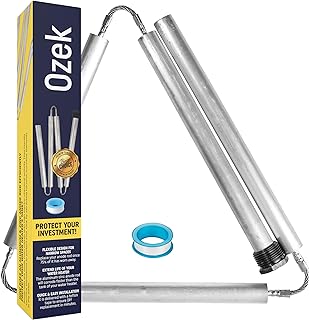
Best for: Users with tight installation spaces who still need effective tank protection. The 44-inch segmented aluminum zinc rod is designed to bend into narrow areas via flexible joints, with a 3/4 in NPT connection.
Why chosen: Its flexible design and long length help reach areas others cannot, improving chances of full tank protection in hard-to-reach spots. Aluminum zinc composition offers corrosion resistance while staying body-safe for water supply.
Caution: The product page notes compatibility specifics; verify your heater’s model and space before choosing this rod.
44″ Flexible Magnesium Anode Rod

Best for: General replacement when wanting broad compatibility with multiple brands, especially in 40-89 gallon tanks. Magnesium rods offer strong protection against corrosion in typical municipal or well water.
Why chosen: The magnesium alloy provides robust protection and is widely used in many standard tanks. The included install kit simplifies replacement, making it a convenient choice for DIY projects.
Caution: Magnesium rods may not be ideal in all water chemistries; check your water hardness and any sulfur issues before selecting.
Powered Anode Rod (Electric) for Water Heater

Best for: Homes facing persistent sulfur smells, especially when well-water or water treatment interacts with the tank.
Why chosen: Titanium-powered design targets sulfur odors specifically, aiming to restore fresh-tasting water while extending tank life through reduced corrosion and sediment buildup.
Caution: Claimed compatibility notes indicate broad fit, but verify your heater type and installation needs before purchase.
Eau 44 Inch Magnesium Rod With Install Kit

Best for: Replacement when easy installation matters and a complete kit is preferred. The 44-inch flexible, four-part design helps with space constraints.
Why chosen: Magnesium is a proven protector against tank corrosion, and the install kit (including tape and socket) supports straightforward DIY replacement.
Caution: The four-part design requires careful alignment during assembly to ensure full protection and a proper seal.
Buying Guide
What to consider when choosing a water heater cathode rod?
- Tank size compatibility: Most 40-89 gallon tanks are supported; confirm your unit’s exact capacity and manufacturer guidance.
- Material and chemistry: Magnesium offers strong protection but can react differently to water hardness; aluminum zinc is typically more universal for softened water.
- Space and installation: In tight spaces, flexible rods or longer units with joints help with access.
- Warranty and longevity: Look for long warranties and verified corrosion protection claims to extend tank life.
- Odor control: If rotten-egg odors are present, prioritize rods marketed for odor elimination.
- Kit inclusions: Some rods ship with install kits, Teflon tape, or sockets—these simplify DIY replacement.
Frequently Asked Questions
- What is a water heater cathode rod used for? – It protects the inner tank from corrosion and reduces sediment buildup, extending heater life.
- Can I replace a standard rod with a powered anode rod? – Yes, when the heater supports a compatible setup and installation is performed per product instructions.
- Will a magnesium rod cause more sulfur smells? – Generally not; magnesium protects against corrosion, but odor issues depend on water chemistry. Odor-focused rods may be needed for smell problems.
- How do I know which rod fits my tank? – Check your tank size (gallons), manufacturer recommendations, and the rod’s thread size (NPT) and length.
- Is installation suitable for DIY? – Many rods include install kits and are designed for DIY replacement, but follow all safety and warranty guidelines.
- Should I replace related parts at the same time? – If your current rod shows significant wear, inspect the tank interior and seating area for corrosion or sediment.