Looking for reliable water line heater cables to prevent frozen pipes? This guide highlights five top options, clearly explains who each product is best for, and explains the key tradeoffs. Whether you’re protecting metal or plastic pipes, in a residential or small commercial setting, these cables offer self-regulating heating, built-in thermostats, and robust insulation. Use the table below to compare at a glance, then dive into detailed sections for each product.
| Product | Length | Power | Best For | Notes |
|---|---|---|---|---|
| Frost King HC6A | 6 ft | 7 W/ft | Small to mid-length runs on metal or plastic pipes | Compact, reliable basic option |
| Frost King HC3A | 3 ft | 7 W/ft | Short runs, tight spaces | Same family, shorter length |
| HEATIT 40 ft ETL Self-Regulating | 40 ft | 3 W/ft | Longer runs, high safety certification | ETL certified, robust features |
| VEVOR Self-Regulating 12 ft | 12 ft | 5 W/ft | Mid-length residential projects | Built-in thermostat, IP68 rated |
| JDZKOMKE 50 ft Pipe Heating Cable | 50 ft | 5 W/ft | Outdoor or exposed pipes, longer runs | Industrial-grade construction |
Frost King HC6A Automatic Electric Heat Kit Heating Cables
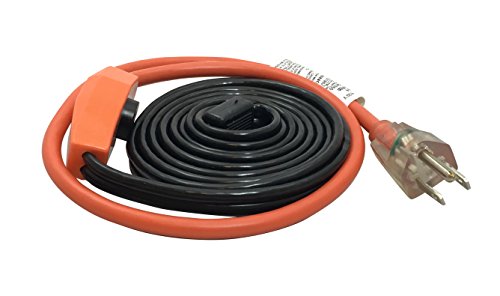
Length: 6 ft; Power: 7 W/ft; Voltage: 120V. This kit is designed to keep water flowing down to -40 degrees F for both metal and plastic pipes. Best for short to mid-length runs in residential settings where space is limited and a straightforward installation is preferred. Caution: not ideal for very long pipe runs without additional cable or multiple kits.
Frost King HC3A Automatic Electric Heat Kit

Length: 3 ft; Power: 7 W/ft; Voltage: 120V. Similar to HC6A but for shorter runs, suited for small cabinets, under sinks, or tight spaces where pipe segments are brief. Best for smaller households or limited installation areas. Limitation: shorter length may require multiple segments for longer pipes.
HEATIT 30ft Self-Regulating Pipe Heating Cable

Length: 30 ft; Power: 3 W/ft. ETL and UL certification provide high safety assurance. Suitable for mid-length runs where a fully certified, end-to-end solution is important. Best for longer pipe sections while maintaining energy efficiency. Caution: some users may require extra length for very extended piping or multiple runs.
VEVOR Self-Regulating Pipe Heating Cable, 12 ft

Length: 12 ft; Power: 5 W/ft. Features built-in thermostat with ±1° accuracy and IP68 waterproof rating. Great for residential projects needing automatic on/off control with reliable protection against freezing. Best for mid-length outdoor applications. Limitation: thermostat may require precise placement to ensure full coverage on curved pipes.
3FT-200FT Pipe Heating Cable for Pipe Freeze Protection (JDZKOMKE)

Length: 50 ft (3–200 ft range); Power: 5 W/ft. Designed for versatile, industrial-grade protection across metal and plastic pipes. Best for longer outdoor runs or exposed piping in warehouses or barns. Caution: ensure proper attachment and avoid heat concentration at joints or fittings.
Buying Guide: Key Considerations for Water Pipe Heating Cables
- Pipe material compatibility: Most cables work with metal, copper, PVC, PEX, and stainless pipes, but always verify compatibility with your pipe type.
- Length and coverage: Measure total pipe length to determine how many cables you need. For long runs, choose longer cables with reliable insulation and a uniform heat profile.
- Power and heat output: Higher watts per foot offers faster protection but uses more electricity. Match power to climate severity and pipe length.
- Self-regulating vs. fixed: Self-regulating cables adjust heat automatically, conserving energy. Fixed cables provide constant heat but may require manual thermostat control.
- Thermostat and certification: Built-in thermostats and certifications (ETL/UL) improve safety and reliability. Look for end-to-end certification of the entire cable.
- Installation considerations: Consider adhesive/clip retention, exposure to moisture, UV, and chemicals. IP ratings (IP65/IP67/IP68) indicate moisture resistance.
- Safety and usage warnings: Do not use on fuel lines or non-water systems; ensure proper clearance from flammable materials and avoid overheating joints or connectors.
- Energy efficiency: The best options balance ease of installation, automatic temperature control, and efficient heat distribution to minimize electricity use.
Frequently Asked Questions
- What is the primary function of a water pipe heating cable?
It prevents freezing by providing controlled heat along the pipe, keeping water flowing in cold temperatures.
- Do these cables require a dedicated outlet?
Most models plug into standard outlets, but always follow the manufacturer’s electrical guidelines and use GFCI-protected outlets when outdoors.
- Is self-regulating or ETL-certified installation safer?
Self-regulating cables automatically adjust power, reducing overheating risk. Fully certified cables ensure end-to-end safety and reliability.
- How do I choose the right length?
Calculate the total pipe length to cover and allow extra length for bends and connections. Longer runs are better for exposed or outdoor piping.
- Can I use heating cables on all pipe types?
Most are suitable for metal and plastic pipes; verify material compatibility with the product’s specifications.
- What maintenance is needed?
Inspect connections and cords for wear, ensure clear mounting, and replace sections showing damage or loss of insulation.