Smart thermostats for high-voltage baseboard heaters bring precise control, energy savings, and remote monitoring to larger spaces. This guide highlights five top WiFi-enabled options, covering installation considerations, compatibility, and how each device supports popular ecosystems like Apple HomeKit, Alexa, and Google Home. Whether you have 120V or 240V wiring, these smart thermostats help you tailor heating schedules, curb energy use, and maintain comfort with app-based control.
| Product | Brand | Voltage Range | Key Benefit |
|---|---|---|---|
| Mysa Smart Thermostat LITE | Mysa | 120V/240V | WiFi control with scheduling and energy reports |
| Heat Storm HS-1500-PHX-WIFI | Heat Storm | 120V/240V | WiFi-enabled infrared wall heater |
| Mysa Smart Thermostat | Mysa | 240V | Remote control, adaptive display, alerts |
| meross Smart Thermostat | meross | 120V/240V | Voice control with multiple integrations |
| GiveBest Smart Wall Heater | GiveBest | 120V/240V | WiFi-enabled, remote control, ECO mode |
style=”display:none;”>Note: This summary table provides a quick comparison for the chosen products. Each product section below contains detailed features, installation notes, and ecosystem support.
Product Highlights
Mysa Smart Thermostat LITE For Line Voltage Baseboard Heaters
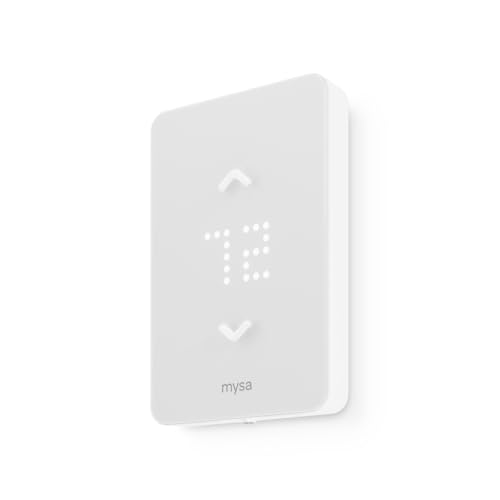
Mysa’s LITE model provides smart WiFi control for 120V to 240V electric baseboard and similar heaters. It supports custom schedules, away-mode programming, and energy reporting, helping households reduce heating costs. The app offers remote control and smart integrations with no subscription fees, ensuring ongoing access to features.
Heat Storm HS-1500-PHX-WIFI Infrared Heater

This wall-mounted infrared heater emphasizes space saving and convenient control via Wi-Fi. It includes a touch digital thermostat, remote, and tip-over safety. Its wall-mount design helps conserve floor space in bedrooms, kitchens, offices, and other rooms where a compact heater is desired.
Mysa Smart Thermostat For Electric Baseboard Heaters 240V

Designed for high-voltage systems, this Mysa model supports 1900W at 120V or 3800W at 240V with a four-wire setup including neutral. It features adaptive brightness display and a smaller form factor. Installation notes emphasize compatibility checks, especially for older or two-wire baseboard configurations.
meross Smart Thermostat For Electric Baseboard Heaters

Meross offers a 120V-240V Wi-Fi programmable thermostat compatible with HomeKit, Alexa, Google Home, and SmartThings. It requires at least four wires and supports high voltage loads. The setup emphasizes remote control, voice commands, and energy-saving scheduling, making it a versatile choice for larger baseboard or convector systems.
GiveBest Smart Wall Heater With WiFi And Remote

GiveBest’s smart wall heater offers remote and WiFi control, three heating modes, and ECO-focused operation. The unit can be mounted on the wall or used with retractable feet for floor placement. It suits living rooms, bedrooms, bathrooms, garages, and basements where space efficiency and adjustable heating matter.
Buying Guide: Key Purchase Considerations
- Voltage and wiring: Confirm 120V or 240V compatibility and the presence of the required four wires (including a neutral or second live) for proper thermostat operation.
- Load capacity: Check the maximum wattage your system can handle, especially for 240V setups where heaters may exceed 3000W. Ensure the thermostat’s rating matches or exceeds the heater’s load.
- Smart ecosystem compatibility: Identify preferred voice assistants and platforms (HomeKit, Alexa, Google Home, SmartThings) and verify official integration support.
- Installation ease: Some models require DIY wiring and a neutral wire; others are designed for simpler retrofits. Review manufacturer install guides and energy-saving features.
- User interface and display: Consider adaptive brightness, clear temperature readouts, and intuitive controls for both app and on-device use.
- Energy savings features: Look for schedules, away modes, energy reports, and adaptive learning to optimize heating without sacrificing comfort.
- Safety and reliability: Safety features such as tip-over protection, overheat protection, and robust remote connectivity are important for daily use.
- Price-to-feature balance: Compare features across brands to determine which thermostat provides essential smart controls without unnecessary extras.
How To Choose Between These Models
- Best for broad ecosystem support: If you want strong HomeKit, Alexa, and Google compatibility, consider the meross or Mysa options, which emphasize multi-platform control and routines.
- Best for energy reporting: Mysa LITE and higher-end Mysa models emphasize energy usage insights and scheduling that help reduce consumption over time.
- Best for space-constrained rooms: Heat Storm’s infrared wall-mounted design preserves floor space while delivering targeted warmth in smaller areas.
- Best value for flexible mounting: GiveBest offers wall or floor placement and ECO modes, suitable for living spaces with variable layout needs.