Answering the question of how to heat water with wood efficiently, this guide highlights five top wood-burning water heater options. These units are best for outdoor hot tubs, off-grid cabins, and camping setups where electricity is limited. The selections emphasize robust materials, corrosion resistance, and simple installation. The buyer should consider pool or tub size, required heat exchange capacity, and whether the stove design includes a circulation pump or relies entirely on natural draft. The table below summarizes the chosen products and their primary use cases to help you compare at a glance.
| Product | Best For | Key Benefit |
|---|---|---|
| POOLCOMFT Wood Pellet Pool Heater | Backyard spa or hot tub owners | Titanium coil exchanger for rapid heat transfer |
| QUELECO Stainless Steel Heat Exchanger Coil | Outdoor baths and hot tubs | Food-grade 304 stainless steel, customizable |
| ALEKO External Wood-Burning Hot Tub Heater KITSTOVECMY1 | Off-grid hot tubs and remote cabins | Off-grid operation, included pipes and clamps |
| AB 300 kBTU Heat Exchanger | Large pools and spa systems | High heat capacity, corrosion-resistant 316L |
| FIREHIKING Wood Stove Water Tank | Camping and small groups | 3L capacity, 304 stainless steel |
POOLCOMFT Wood Pellet Pool Heater With Water Pump

Best for portable, low-energy hot water and spa heating. This unit uses a titanium coil heat exchanger for rapid heat transfer and a built-in circulation pump, enabling continuous hot water without external power sources. The design leverages wood’s energy for efficient heating with a compact footprint, ideal for backyard spa setups or weekend cabin getaways. The stainless steel construction adds longevity and resistance to corrosion in outdoor environments. A key limitation is the need for a suitable wood fuel source and compatible water system configuration.
QUELECO Stainless Steel Heating Coil Heat Exchanger

Best for outdoor baths and hot tubs that require a durable, corrosion-resistant coil. Made from food-grade 304 stainless steel with a 1″ x 29 ft coil, it delivers reliable heat transfer without electricity. The unit is customizable in dimensions and connectors, allowing adaptation to existing setups. Potential trade-offs include installation complexity and the need for compatible fittings. It’s ideal for buyers who want a robust, maintenance-friendly coil that can be tailored to their water pathway needs.
ALEKO External Wood-Burning Hot Tub Heater KITSTOVECMY1

Best for off-grid hot tubs and backyard cabins, this external heater operates without electricity or pumps. It includes two high-temperature pipes and six clamps to secure the stove to a wood-fired tub, with stainless steel construction for rust resistance. It’s a straightforward choice for off-grid enthusiasts who prioritize independence from electrical supplies. A limitation is that it relies on proper alignment and fit with a compatible tub system, which may require careful installation planning.
AB 300 kBTU Heat Exchanger For Outdoor Wood Boiler/Pool
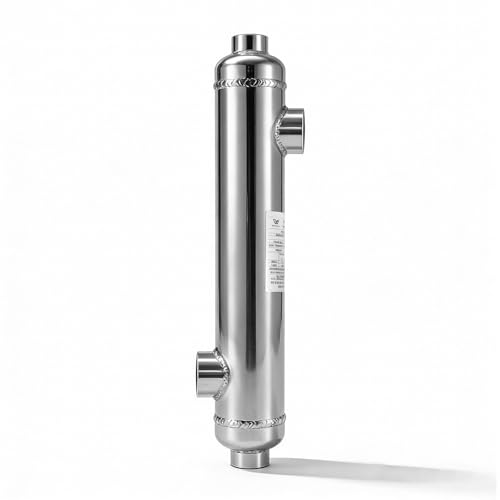
Best for large pool or spa systems requiring substantial heat output. The 316L stainless steel body provides excellent corrosion resistance when paired with chemical-treated water. It’s designed for high-capacity pool heating, and its dual-port configuration supports integration with existing heating lines. A caution is that installation may necessitate professional piping alignment and adequate mounting space due to its size and flow requirements.
FIREHIKING Wood Stove Water Tank For Campers

Best for camping and small groups seeking portable hot water. This 3L water tank is made from 304 stainless steel, offering durability and resistance to odors and high temperatures. It utilizes waste heat from a wood stove, so it’s energy-efficient and requires no extra fuel or electricity. A potential limitation is its modest capacity, which may necessitate refilling for larger needs or longer outings.
Buying Guide: Wood Burning Water Heaters
What should you prioritize when choosing a wood-burning water heater? Consider heat output, fuel type, and system integration. If you need rapid hot water for a hot tub, a titanium coil or high-capacity 316L exchanger can deliver faster heat transfer and longer life. For off-grid use, look for models that operate without electricity or rely on simple circulation.
- Heat exchanger material: Titanium or 316L stainless steel offers corrosion resistance in chemically treated water and outdoor environments.
- Fuel and energy source: Wood-only systems save energy but require proper setup and consistent fuel supply.
- System integration: Ensure the heater matches your tub or pool’s inlet/outlet sizes and that clamps or pipes are included if off-grid.
- Capacity and demand: Larger pools or multiple users require higher BTU capacity; smaller camping tanks suit solo use.
- Installation considerations: Some units need professional piping or secure mounting; others are more plug-and-play.
FAQ
- What is a heat exchanger coil, and why does it matter? A heat exchanger coil transfers heat from the stove to water. Materials like titanium and 304/316L stainless steel improve efficiency and durability in outdoor use.
- Can these heaters operate without electricity? Many models designed for off-grid use can, or rely on natural convection, but some include a small circulation pump for faster heating.
- What sizes of tubs or pools are suitable? Larger BTU-rated units work best for bigger pools; smaller 3L tanks suit camping or solo hot tubs.
- Are there safety precautions? Ensure proper installation, avoid overheating, and follow manufacturer guidelines for water temperature, venting, and load.
- Do these heaters require professional installation? Some setups are DIY-friendly, especially coil-based kits, while larger or integrated systems may benefit from professional piping.
- What maintenance is needed? Regularly inspect coils, seals, and connections for corrosion, leaks, and blockages; clean as recommended by the manufacturer.