Answering the need for durable, heat-rated sealers, gaskets, and tapes near wood stove pipes is essential for reducing smoke leaks and maintaining safe clearances. This guide highlights five top products that perform well in static joints, flue connections, and stove collar seals. It targets homeowners, DIY enthusiasts, and contractors seeking reliable, heat-resistant sealants and gaskets for wood stoves and chimneys. Below is a quick summary of the chosen products, with key strengths to help you compare at a glance.
| Product | Best For | Key Benefit | Limitations |
|---|---|---|---|
| 2500°F High Temp Stove Gasket Cement (2-Pack) | Extreme heat zones, static joints | Silicate-based, paintable, non-flammable | Two-pack option may be more than needed for small repairs |
| Meeco’s Red Devil 600B High-Temperature Silicone Sealant | Pellet stove flues, vent pipes | Flexible, weather-resistant, up to 500°F intermittently | Silicone sealants can require cure time for full strength |
| 2500°F High Temp Stove Gasket Cement (Single) | Single-use or smaller projects | Same high heat, silicate-based formula | Single-use bottle; plan use accordingly |
| Rutland High Heat Latex Sealant 800°F | Chimney and stove pipe sealing | Flexible latex fire caulk, durable near firebox | Latex formula may not be ideal for ultra-high heat zones |
| Stove Gasket and Gasket Tape Options (Protalwell, WINTACK) | Gasket sealing and edge protection | Self-adhesive, high-temp rated, easy installation | Adhesives may fail if not properly prepared or heated |
2500°F High Temp Stove Gasket Cement, Black 10 oz

Best for: Wood stoves, fireplaces, and chimneys where static joints require a durable, heat-resistant seal. This silicate-based, non-flammable cement is paintable for a clean finish after cure. It also serves as a stove pipe sealant for static flue joints, helping reduce smoke leakage and create an airtight seal.
Why selected: It combines high heat tolerance with paintability, making it suitable for visible areas where a neat look matters. The silica-based composition resists extreme heat and remains stable in long-term use.
Limitation: It is intended for static joints; moving joints should use flexible sealants to accommodate expansion and contraction.
Meeco’s Red Devil 600B High-Temperature Silicone Sealant
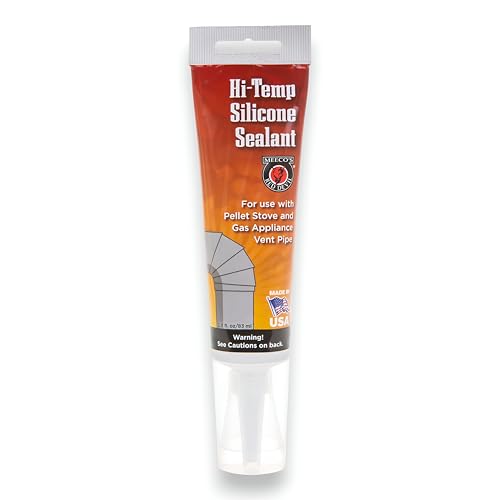
Best for: Pellet stove flues, gas vent pipes, and fireplace joints exposed to elevated heat. The black, ready-to-use silicone sealant resists temperatures up to 450°F continuous and 500°F intermittent heat, delivering a flexible, watertight seal that withstands weathering.
Why selected: Its continuous flexibility helps accommodate joint movement and temperature cycling, reducing the chance of cracking over time.
Limitation: Silicone settings require proper curing time and surface prep for optimal adhesion. Ensure surfaces are clean and dry before application.)
2500°F High Temp Stove Gasket Cement 2-Pack

Best for: Larger or multiple projects requiring repeat use in high-heat areas around wood stoves and chimneys. The two-pack provides backups for continuous maintenance without searching for replacements.
Why selected: The same high-heat, silicate-based formula as the single pack ensures consistent performance across projects.
Limitation: Two packs can lead to over-application if not portioned carefully; use only as needed to avoid waste.
Rutland High Heat Latex Sealant 800F

Best for: Sealing gaps around fireboxes, flue collars, and dampers where repeated temperature swings occur. The latex fire caulk offers a flexible, heat-resistant seal that can be used near stovepipe joints and brick surrounds.
Why selected: Its latex formulation provides reliable sealing with flexibility, helping prevent cracking as temperatures fluctuate.
Limitation: It is not suitable for extremely high-heat zones beyond its rated 800°F; for hotter areas, consider silicate-based options or ceramic binders.
Protalwell Flat Gasket Tape

Best for: Creating a tight seam between flat surfaces in stove and fireplace installations. The self-adhesive gasket tape simplifies installation without additional cement or silicone.
Why selected: Graphite-impregnated fiberglass construction withstands up to 1100°F, offering durable, wear-resistant sealing for static joints and flat seams.
Limitation: Self-adhesive tapes may not bond well to dusty or oily surfaces; ensure proper surface prep for best results.
Stove Gasket Tape 1″ Wide

Best for: Replacing or upgrading flat door gaskets on wood stoves and fireplaces. This 1″ wide, 1/8″ thick tape provides a solid seal along door edges and frames.
Why selected: Self-adhesive, high-temperature resistant, and easy to install, delivering a tight seal for ongoing stove operation.
Limitation: Adhesive performance may degrade if exposed to oil or heavy dust; wipe surfaces before applying.
Wood Stove Gaskets, Flat Door Gasket Replacement

Best for: Replacement gaskets for wood stoves and fireplaces needing a quiet, smoke-free seal around doors. The self-adhesive fiberglass tape is designed for 72 inches length, offering a straightforward install.
Why selected: High-temperature adhesive and a tight weave seal help prevent smoke leakage and dust escape.
Limitation: Ensure the gasket matches the stove model and door geometry to avoid gaps or misalignment.
Buying Guide: Key Purchase Considerations
- Heat rating: Choose products rated for the highest temperatures near your stove or chimney (800–2500°F range). Higher ratings often indicate better performance in direct flame zones.
- Sealant vs. gasket vs. tape: Sealants cure to form a hard or flexible seal; gaskets provide a lasting edge seal; tapes offer quick, self-adhesive options for flat seams. Match the product type to the joint type.
- Joint movement: Static joints tolerate rigid sealants; flexible silicone or latex caulks handle expansion and contraction around fireboxes and flues.
- Application surface: Clean, dry surfaces yield the best adhesion. Dust, oil, or old sealant residues can reduce effectiveness.
- Curing time: Some products require curing before exposure to heat. Plan installations to avoid early heat exposure.
- Finish needs: Paintable formulas are useful where aesthetics matter or to blend with chimney interiors.
- Installation difficulty: Self-adhesive tapes and tapes with simple-to-apply glues reduce installation time for DIYers.
FAQ
- What is the best sealant for wood stove pipes?
- Can I use gasket tape on a stove door?
- Do I need to cure sealants before lighting a fire?
- Are there safety considerations with stove pipe sealers?
- What should I avoid when choosing a seal for stove joints?
- How do I determine which product is best for my stove?
High-temperature, non-flammable sealants such as silicate-based cement and high-heat silicone are commonly recommended for static joints and flue connections near wood stoves.
Yes, gasket tapes are suitable for door edges and flat seams if the surface is clean and dry and the tape is rated for high temperatures.
Yes. Cure times vary by product; follow manufacturer instructions to ensure full adhesion and seal integrity before first use.
Work in a well-ventilated area and wear gloves. Ensure heat sources are cool before applying any sealant or gasket near joints.
Avoid using non-heat-rated adhesives on hot joints and avoid rigid compounds on flexible joints where movement occurs.
Assess joint type (static vs. moving), expected heat exposure, whether a paintable finish is desired, and whether you need a quick-install tape or a long-lasting gasket.