Answering the need for powerful, reliable heat in large spaces, these keep-warm options excel where standard heaters fall short. This guide highlights five versatile choices suited for workshops, construction sites, barns, and outdoor work. Each product is evaluated for fuel type, output range, portability, and safety features to help you pick the best fit for your space and run time needs. This selection emphasizes high-BTU performance while noting practical limits such as fuel availability and ventilation requirements.
| Product | BTU Range | Fuel Type | Best For |
|---|---|---|---|
| Reddy Heater 220,000 BTU | 180k–220k | K-1 kerosene, diesel, JP8 | Large open-workspaces, construction sites |
| Mr. Heater 125,000 BTU Forced-Air | 125k | Propane or Natural Gas | General large-area heating with forced air |
| DEWALT F340710 65,000 BTU | 65,000 | Propane | Portable mid-sized spaces and job sites |
| Mr. Heater 60,000 BTU Quiet Burner | 30k–60k | Propane | Quieter operation in workspaces |
| Remington LP Forced Air 60,000 BTU | 60k | Liquid Propane | Workshops and barns needing steady warmth |
Reddy Heater 220,000 BTU Forced Air Kerosene Heater

Best for large, open spaces that require robust heat delivery. This model offers high BTU output (180k–220k) and broad heating coverage, making it suitable for construction sites and outdoor work. It supports multiple fuels, including kerosene and various fuel oils, giving flexibility when gas is not available. The dual heat option helps conserve fuel and extend run time, which is beneficial on remote jobsites.
Who it’s best for: contractors and builders needing powerful, fuel-flexible heat in large zones. Why selected: the high BTU range and versatile fuels handle big areas where quick heat-up and sustained warmth matter. Caution: kerosene or diesel fuels require proper storage and ventilation to ensure safe operation.
Mr. Heater 125,000 BTU Forced-Air Unit Heater
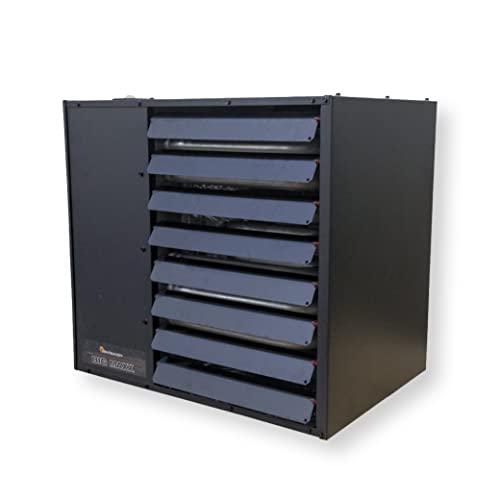
Better for large garages and workshops that need consistent forced air warmth. This unit supports propane or natural gas and includes an electronic ignition with powered exhaust. The 125,000 BTU output provides ample heat distribution for open-plan spaces, while the powered exhaust helps manage combustion byproducts. Best for: spaces where steady airflow improves comfort and reduces cold spots. Caution: installation should follow ventilation and clearance guidelines to prevent carbon monoxide buildup.
DEWALT F340710 35,000-65,000 BTU Propane Heater

Best for portable heating needs where space is limited but flexible BTU control matters. The DEWALT unit offers adjustable output from 35,000 to 65,000 BTU and comes with a hose and regulator included for easy setup. Suitable for job sites and workshops that require rapid heat up in a compact footprint. Best for: smaller to medium rooms, drafty spaces, or temporary heating. Caution: not designed for continuous heavy-duty use in ultra-large spaces without supplemental heat sources.
Mr. Heater Original 540-Degree 45,000 BTU Radiant Propane Heater
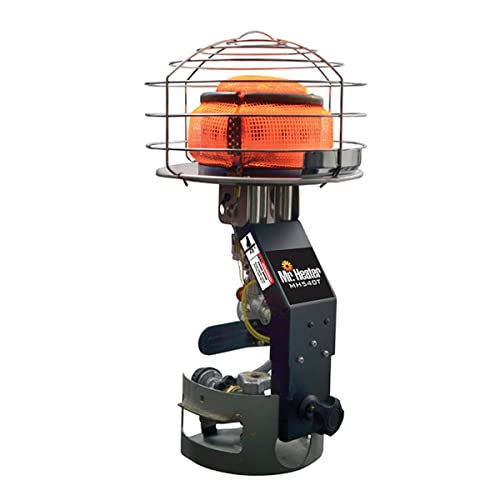
Best for localized warmth at a job site or outdoor work area. The radiant heater mounts directly to a 20 lb tank and delivers 45,000 BTU with multi-directional heating. It’s a good choice when you want heat focused near equipment, worker stations, or in drafty corners. Caution: radiant heat is most effective at close range; larger open spaces may require supplementary sources.
Mr. Heater 30,000 BTU Vent Free Blue Flame Natural Gas Heater

Choose this when you need a compact, vent-free option for smaller large rooms up to 1,000 square feet. It outputs 30,000 BTU and operates with a battery-operated electronic ignition for easy startup. Best for: space-constrained workshops or rooms where venting is impractical. Caution: vent-free units should be used with adequate indoor air ventilation and within clearance guidelines to maintain air quality.
Buying Guide: How To Choose The Right High-BTU Heater
- Space size and heating needs: Match BTU output to the square footage and ceiling height. Larger spaces may require multiple units or a high-output kerosene/diesel heater for effective warmth.
- Fuel availability and type: Propane, natural gas, kerosene, and diesel each have pros and cons. Consider fuel cost, storage, and local approvals.
- Ventilation and safety: Venting requirements vary by model and fuel. Ensure proper clearance from combustibles and install CO detectors as needed.
- Portability and installation: Portable units are ideal for changing work zones; permanently installed units suit fixed spaces. Check mounting options and power supply needs.
- Run time and efficiency: Look for features like variable output, safety shut-offs, and fuel-saving modes to optimize running costs.
- Maintenance and service: Consider availability of spare parts, ease of cleaning, and access to service centers.
Frequently Asked Questions
- What is a practical BTU range for heating large garages?
– For open spaces up to 2,000–3,000 sq ft, 60,000–125,000 BTU units paired with proper ventilation can be effective, especially when used in combination with radiant or zone heating. - Can I run these heaters indoors safely?
– Vent-free or vented operation depends on the model and fuel type. Always follow the manufacturer’s clearance and ventilation guidelines and install any required detectors. - Are kerosene and diesel heaters suitable for construction sites?
– Yes, but ensure appropriate fuel handling, storage, and site ventilation to manage fumes and fire risk. - Should I choose a portable or a stationary heater for a workshop?
– Choose portable for frequent space changes and temporary projects; stationary units are better for fixed setups needing continuous warmth. - What maintenance improves safety and efficiency?
– Regularly inspect fuel lines, connections, and ignition systems; verify CO and flame safety features; follow manufacturer maintenance schedules. - Do high-BTU heaters require special permits?
– Local regulations vary; check with local authorities regarding propane, natural gas, or kerosene heater installations and venting requirements.