Answering buyers who need precise, reliable control for electric baseboard heaters and convectors, this guide highlights five top digital line voltage thermostats. Each option suits different needs—from ultra-precise non-programmable control to WiFi-enabled smart management. This overview helps you pick the best for long-term energy savings, quiet operation, and easy scheduling. Ideal buyers include homes with electric baseboards seeking silent switching, smart-home enthusiasts, and users who want simple, dependable temperature regulation without complicated installation.
| Product | ||
|---|---|---|
| Honeywell Home Digital Non-Programmable Thermostat for Electric Heat Only | Non-programmable | Those needing precise, constant temperature with minimal setup |
| Honeywell TL8230A1003 Electric Heat Digital 7 Day Programmable Thermostat | 7-day programmable | Users who want daily schedules for energy savings |
| ELV4 Programmable Line Voltage Thermostat | Line-voltage, 5/2-day programming | Flexible daily patterns with energy efficiency |
| Mysa Smart Thermostat LITE for Electric Baseboard Heaters | Smart, WiFi-enabled | Smart-home integration and remote control |
| Honeywell Home 5-2 Day Programmable Thermostat RLV4305A1000 | 5-2 Day programmable | Electric baseboards and convectors with regional schedules |
Honeywell Home Digital Non-Programmable Thermostat
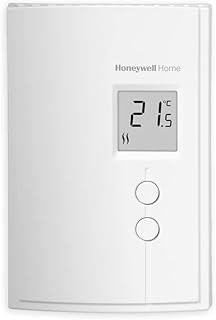
Best for accuracy and silent switching, this digital non-programmable thermostat is designed for electric baseboard heaters and convectors (2 wires). It delivers high precision control with an accuracy of ±0.27°F, and its TRIAC switching provides 100% silent operation, reducing temperature swings. Choose this if you want straightforward control without programming and value quiet performance. Limitation: lacks scheduling features for seasonal adjustments.
Honeywell TL8230A1003 Electric Heat Digital 7 Day Programmable Thermostat

Best for weekly schedules and energy savings, this 7-day programmable thermostat supports up to 20% energy savings with pre-set programs, and has electronic temperature control with precision of ±1°F. Its quiet operation helps reduce typical thermostat clicking sounds. Choose this if you want customizable daily routines while keeping heating costs in check. Limitation: may require setup to optimize the weekly schedule.
ELV4 Programmable Line Voltage Thermostat

Best for flexible daytime routines and energy efficiency, the ELV4 offers 4 program periods per day and a temporary override function for quick adjustments. UL approved, it’s not compatible with loads containing both resistive heating elements and inductive components. Choose this if you need a balance between ease of use and adjustable daily programming. Limitation: compatibility with mixed loads is restricted.
Mysa Smart Thermostat LITE

Best for remote control and smart-home integration, Mysa LITE supports WiFi, 7-day scheduling, and voice assistance via Apple HomeKit, Amazon Alexa, and Google Home. It can save up to 26% on heating costs through personalized schedules and remote adjustments. Choose this if you want app-based control, energy insights, and voice-enabled convenience. Limitation: requires WiFi for full functionality; basic away-mode needs connectivity.
Honeywell Home RLV4305A1000
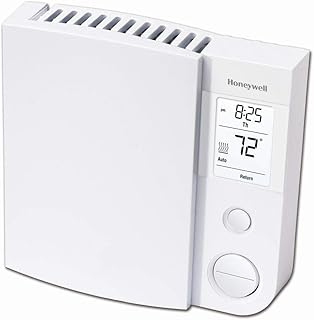
Best for regional schedules and baseboard fan-forced heaters, the RLV4305A1000 is a digital 5-2 day programmable thermostat designed for electric baseboards and convectors. Its two-day-off patterns support weekday/weekend differences, helping to optimize comfort and savings. Choose this if you want a balance of simple programming and energy control. Limitation: features are more basic compared to full-week scheduling options.
Buying Guide
What should you consider when choosing a digital line voltage thermostat?
- Compatibility: Ensure the device matches your heating system’s load type (resistive line voltage) and whether you need single or dual-line options.
- Programming vs. non-programmable: Decide if you want fixed temperature control or daily/weekly schedules to maximize efficiency.
- Precision and noise: Look for accuracy ratings (±0.27°F, ±1°F) and whether the thermostat switches silently (TRIAC) to avoid audible clicks.
- Smart features: If remote control or voice integration matters, prioritize WiFi-enabled models and compatible ecosystems (HomeKit, Alexa, Google Home).
- Override options: Some models offer temporary overrides; consider how often you need quick adjustments.
- Installation: Confirm that the thermostat is installable on your existing wiring (2-wire vs. more complex configurations) and whether professional help is advisable.
Buying Considerations By Use Case
- Quiet operation required: Choose models with TRIAC switching for silent performance.
- Strict daily schedules: A 7-day or 5-2 day programmable unit helps optimize energy savings.
- Smart control desired: Opt for a WiFi-enabled model with app access and voice assistant support.
- Simple, reliable control: A high-precision non-programmable thermostat may be best for straightforward temperature stability.
FAQ
- What is a line-voltage thermostat?
A line-voltage thermostat directly switches electric baseboard or convector heaters on and off by controlling the line voltage.
- Do programmable thermostats save energy with baseboard heaters?
Yes. Scheduling adjustments align heating with occupancy, reducing usage during unoccupied periods.
- Can I use a smart thermostat with baseboard heaters?
Yes, if the model supports line-voltage loads and WiFi connectivity for remote control and automation.
- Are there safety considerations with line-voltage thermostats?
Install according to the manufacturer’s instructions. If unsure, consult a licensed electrician to ensure proper wiring and safety.
- Will a non-programmable thermostat still improve comfort?
Yes. It provides precise, steady temperature control without the complexity of scheduling.
- What is the benefit of a TRIAC switching thermostat?
TRIAC switching offers silent operation and smoother temperature regulation, reducing swings and noise.