If you’re seeking efficient, space-saving heat that complements modern decor, radiant wall panel heaters are a solid choice. This guide highlights five top options, detailing who each is best for, and why they stand out. Ideal buyers include budget-conscious rooms with up to 120 sq ft, households needing quiet operation, smart-home enthusiasts, and those prioritizing safety and energy efficiency.
Summary of featured products:
| Product | Best For | Key Benefit | Limitations |
|---|---|---|---|
| EconoHome 250W Convection Wall Heater | Small rooms or bathrooms; compact spaces | Triple-insulated, easy install, paintable design | Hard-wired option; may require clearances near water |
| EconoHome 400W Convection Wall Heater | Medium rooms up to 120 sq ft; heat reflector included | Overheat protection; durable, paintable finish | Hard-wired; slightly larger panel |
| EconoHome 400W Wall Heater Panel | Energy-conscious homes; frequent use | Energy saving claims; heat reflector included | Hard-wired; depends on room layout |
| ENVI Plug-in Panel Heater | Low-wattage, 24/7 comfort; homes with children/pets | Fan-less, safe sensor, 24/7 operation | Lower heating capacity; not ideal for very large spaces |
| SENMIY Wall Convection Panel | Smart-home users; flexible control via app | WiFi, remote, and voice control; efficient heating | Higher reliance on app compatibility |
EconoHome 250W Convection Wall Heater
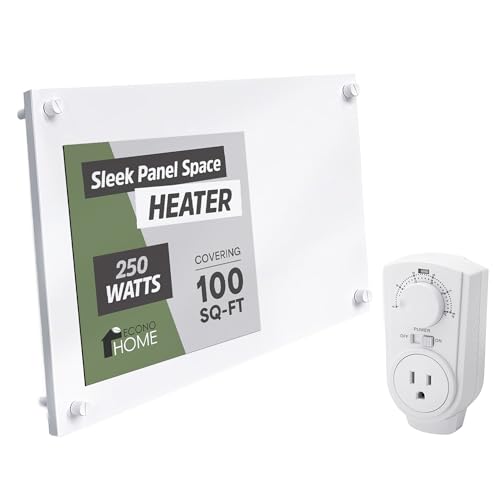
This 250-watt panel is designed for rooms around 100 sq ft, such as small living areas or bathrooms. It operates at 120 volts and uses convection currents to distribute warmth, with an exterior that stays safe to touch at typical operating temperatures. Best for compact spaces where discreet, steady warmth is desired.
Who it’s for: buyers prioritizing a slim, wall-mounted unit with triple-insulated safety features and a paintable finish to blend with decor. The unit ships with installation hardware and is cETL approved, UL-2021, and RoHS compliant. A note: hard-wired installation is possible, and the unit should be placed at least 12 inches from water sources for safety.
Limitation: The heater’s capacity is best for smaller rooms; larger spaces may require multiple units for even warmth.
EconoHome 400W Convection Wall Heater
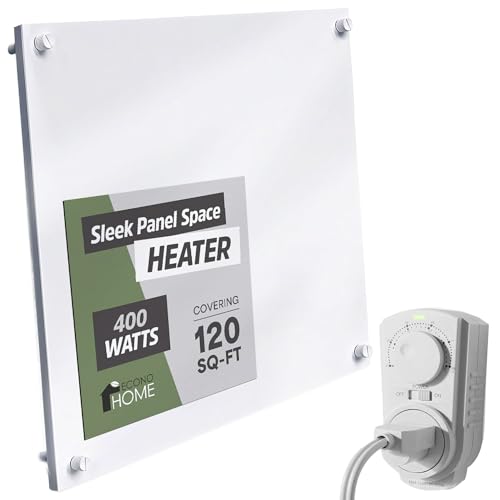
This 400-watt panel expands coverage to rooms up to approximately 120 sq ft, supported by a heat reflector to focus warmth into the living area. It offers a 23.5 x 23.5 inch footprint and a thinner profile, enabling easier wall mounting in compact spaces. It includes overheat protection and is cETL approved, UL-2021, and RoHS compliant.
Who it’s for: buyers needing stronger heat output in medium-sized rooms who still want a sleek, paintable finish. Best for those who value safety features and a dedicated heat reflector for more efficient heat distribution.
Limitation: Hard-wired installation is common with this model; ensure the wall can accommodate the panel’s depth.
EconoHome 400W Panel with Thermostat

This 400W panel emphasizes energy efficiency, claiming up to half the heating costs of conventional space heaters by delivering a constant ambient warmth with low wattage. It includes a heat reflector and overheat protection, with a 23.5 x 23.5 inch footprint and a paintable surface to suit various interiors. It’s a practical choice for energy-minded homes seeking steady convection warmth.
Who it’s for: households aiming to reduce energy bills without sacrificing comfort, especially in rooms around 120 sq ft. Best when paired with a thermostat-equipped setup for consistent temperature control.
Limitation: Hard-wired installation is common; plan electrical wiring accordingly and ensure proper clearances near water sources.
ENVI Plug-in Electric Panel Heater

The ENVI unit is a plug-in panel heater focused on targeted, low-wattage warmth. It operates with a safety sensor and is designed for 24/7 operation, making it suitable for spaces where constant ambient warmth is desired without loud fans. The heater is built to minimize dust convection and is made in the USA.
Who it’s for: buyers seeking a quiet, safe, plug-in solution for zones like homes with children or pets, or for rooms where a low-profile heater is preferred. It’s best for supplemental heat rather than primary heating in larger spaces.
Caution: While energy-efficient, it may not deliver enough heat for very cold winters in large rooms; plan a secondary heat source if needed.
SENMIY Smart Convection Panel

The SENMIY wall convection panel emphasizes smart control with three options: remote, WiFi app, and touch panel. It is designed for indoor use and integrates with smart home ecosystems via common platforms. The model highlights energy efficiency, with a 400W heat output and improved thermostat accuracy to around 1°F, aiding consistent comfort. It supports voice control through popular assistants and offers overheat and frost protections.
Who it’s for: smart-home enthusiasts who want flexible control, scheduling, and voice-activated comfort in living rooms, bedrooms, or home offices. Choose this if you value app-based scheduling and compatibility with Alexa/Google Home.
Limitation: Dependency on app connectivity can be a consideration; ensure reliable WiFi to maintain seamless control.
Buying Guide
What to consider when choosing a radiant wall panel heater
- Room size and heat needs: Match wattage to square footage. Smaller rooms may be effectively heated by 250W–400W panels, while larger rooms or open-plan spaces might require multiple panels or higher-wattage models.
- Installation method: Decide between hard-wired versus plug-in units. Hard-wired installations can offer a clean, permanent setup but may require professional electrical work; plug-in options provide flexibility and easier setup.
- Energy efficiency: Look for heat reflectors, overheat protection, and thermostatic control. Energy-saving claims often depend on proper insulation and usage patterns.
- Safety features: Heat-resistant casings, electrical insulation, frost protection, tip-over or wall-sense sensors, and IP ratings for damp spaces (e.g., IP44) improve safety in bathrooms or humid areas.
- Smart features: If you use a smart home, prioritize WiFi control, voice compatibility, scheduling, and app reliability to maximize convenience and efficiency.
- Finish and installability: A paintable or neutral finish helps the unit blend with decor. Check dimensions to ensure the panel fits your wall space and mounting hardware is included or compatible.
FAQ
- What space is best for a radiant wall panel heater?
Ideal for bedrooms, small living areas, bathrooms, and zones up to about 120 sq ft, depending on panel wattage and room insulation.
- Are these units safe to run continuously?
Most models include overheat protection and safety sensors. Plug-in versions are designed for continuous operation, while hard-wired units require proper electrical compliance.
- Do high-wattage panels save more energy?
Higher wattage provides more heat; energy savings depend on insulation, usage patterns, and thermostatic control. Use the thermostat to maintain comfort efficiently.
- Can I use smart features with any panel heater?
Only models with built-in or supported smart controls integrate with apps, voice assistants, and home ecosystems. Check compatibility before purchase.
- Is a paintable panel better for decor?
Paintable surfaces help panels blend with room aesthetics, improving visual appeal in living spaces or bedrooms.
- What maintenance is required?
Typically minimal: keep vents clear, inspect wiring if you notice unusual heat or noise, and follow manufacturer guidance for cleaning and mounting checks.